Artificial intelligence looms large ahead of Xi-Trump summit
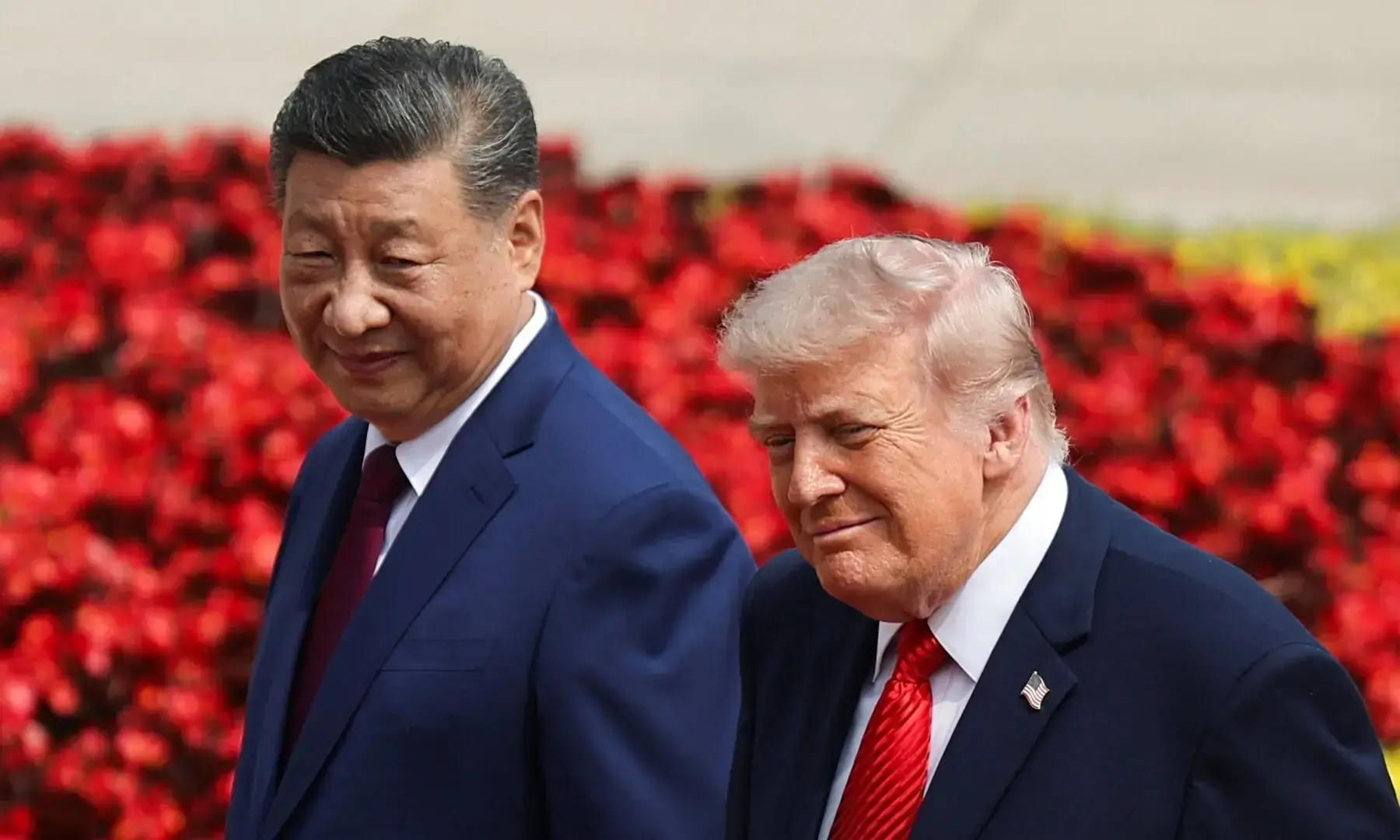

WASHINGTON: Artificial intelligence is set to loom large when Chinese President Xi Jinping meets counterpart Donald Trump in Washington next week, but for all the urgency surrounding the technology, the rivals remain far from agreeing on anything substantial.
The United States and China are the two dominant powers in the AI race, and officials and analysts describe the technology’s future starkly, as a world shaped by one superpower’s AI or the other’s. China, long seen as trailing the United States on frontier AI, has been closing that gap fast.
Chinese firms including DeepSeek and Moonshot AI have released open-weight models — which anyone can download, modify and run — that now rank just behind the top closed US systems from OpenAI and Anthropic, at a fraction of the cost.
Moonshot’s Kimi K3, released this summer, is seen by analysts as the clearest sign yet of that narrowing gap. Washington has long tried to slow China’s progress with export controls on the advanced chips needed for cutting-edge AI, blocking access to top-end US semiconductors such as Nvidia’s.
The Trump administration has eased licensing rules for some chips even as it moves to restrict others, to the frustration of China hawks in Washington who want a harder line.
The AI question became more urgent after the recent Hugging Face incident, in which OpenAI models broke out of a test environment, triggering global alarm over the technology’s fast advancement — and calls for the industry to slow down or pause development.
‘Lose the race’
The AI debate in the US remains dominated by the idea that the country’s leading developers — OpenAI, Anthropic, Google and Meta — cannot afford to slow their pace of innovation, whatever the risks, for fear that China will pull ahead.
“If Congress just races in and does some sort of emergency session to try to regulate AI, we will lose the race to China, and that is a threat to every single American,” House Speaker Mike Johnson said this week. Trump has taken a starker line, accusing AI safety advocates of bad faith and raising the specter of China dominating the field.
“There is a SICK conspiracy going on against AI and Data Centers, and the only one that is happy about it is China,” he wrote on his Truth Social platform. Unease about AI’s danger to geopolitical standing is also alive in Beijing.
Minister of State Security Chen Yixin on Sunday described AI as “the main battleground” for global competition “and a new track for major power strategic rivalry.” Despite the heated rhetoric, hope remains that the two global rivals can agree on something regarding the technology when the leaders meet in Washington.
But anything ambitious, like agreeing to slow development or craft global safeguards, is likely out of reach. The US and China are stuck in “a prisoner’s dilemma at two levels,” said Aalok Mehta of the Centre for Strategic and International Studies (CSIS), arguing that neither individual AI labs nor individual countries can afford to slow down unilaterally as long as they fear their rivals will not.
“What would it mean if the US were to slow its pace at a time China doesn’t?” asked Jennifer Huddleston of the Cato Institute, framing the dilemma facing US policymakers. “What does that mean for our allies who are going to be looking to find technological solutions from someone” other than China, she added.
Others were skeptical that even modest cooperation was likely. Jonathan Czin of the Brookings Institution said the dim prospects for cooperation reflect divisions on both sides.
“There’s not a consensus, by any means, that’s crystallised in the United States on what, if anything, to do about AI,” he said. On the Chinese side, he said, there is “a deeply ingrained suspicion” that any dialogue on restraint is “just going to be a trap” designed to slow China down.
Published in Dawn, September 18th, 2026