Cotton arrivals rise 19pc to 2.4m bales by September mid
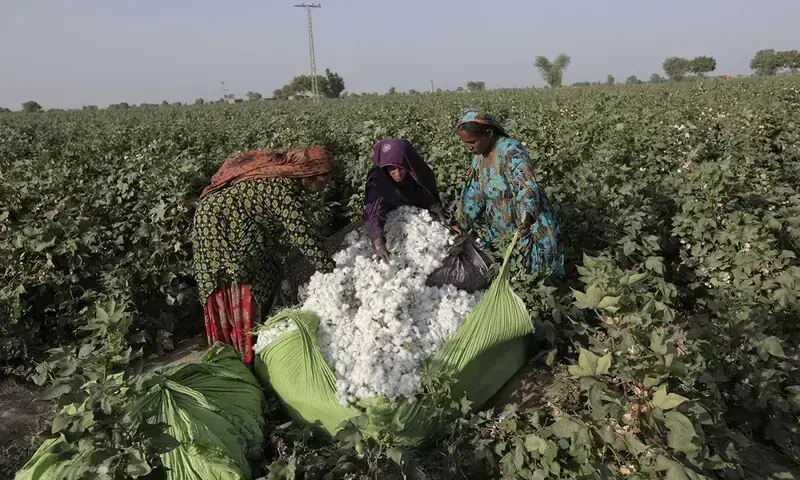

LAHORE: Cotton crop has shown its strongest early-season performance in years, with arrivals at ginning factories up 19 per cent by Sept 15, raising hopes that favourable weather could push this year’s production beyond 6 million bales.
According to the latest Pakistan Cotton Ginners Association (PCGA) report, cotton arrivals reached 2.389 million bales by Sept 15, compared with 2.004m bales during the corresponding period last year. Punjab recorded 860,942 bales, up 24.73pc, while Sindh reported 1.528m bales, up 16.25pc.
Cotton Ginners Forum Chairman Ihsanul Haq said the figures indicated a significant improvement in the crop and expected that the national production could exceed 6m bales this season, compared with around 5.5m bales last year.
He pointed out an unusual regional disparity: cotton arrivals from Sanghar district alone stood at 888,607 bales by Sept 15, exceeding the 860,942 bales received by all ginning factories in Punjab. He said the figures also highlighted the impact of the rapid expansion of sugarcane cultivation on cotton acreage in Punjab.
PCGA reports Punjab production jumps 24.7pc and Sindh’s 16.25pc
Textile mills had purchased at least 2.035m bales so far, and exporters 93,000, leaving about 261,000 bales with ginners for sale. A total of 205 ginning factories were operational in Punjab and 207 in Sindh.
Mr Haq highlighted a major discrepancy in official production estimates. The PCGA put Punjab’s production at 860,942 bales by Sept 15, whereas the Punjab Crop Reporting Service (CRS) reported 1.483m bales by Sept 17 — about 72pc higher. For Sept 1-15 alone, PCGA recorded 324,000 bales against 698,000 bales reported by the CRS.
Cotton analyst Sajid Mahmood said the higher arrivals than last year were encouraging, but cautioned that the crop had entered a critical stage and the final output would depend on pest pressure, rainfall, timely picking, and lint quality.
He said the overall crop condition remained encouraging in major cotton-growing districts of Sindh, particularly Sanghar, Matiari, Tando Allahyar, Hyderabad, Mirpurkhas, Nawabshah and Naushahro Feroze. Moderate rainfall had not caused significant damage so far, he said, although heavy rains could still pose a threat.
In southern Punjab, Mr Mahmood said the crop retained good potential in Bahawalpur, Bahawalnagar, Dera Ghazi Khan, Multan, Vehari, Rahim Yar Khan, Muzaffargarh and Rajanpur.
He identified pink bollworm as the most serious current threat, saying reports of infestation had emerged from several cotton-growing areas of both provinces. Whitefly, jassid, thrips and other sucking pests also remained a concern.
“The next few weeks will be critical,” Mahmood said, stressing continuous monitoring of bolls, timely pest-control measures and picking to protect both yield and lint quality. He said rainfall followed by moisture could also increase the risk of pest attacks and affect fibre quality.
Mr Haq said international market conditions had recently put pressure on cotton prices. A sharp decline in domestic prices during the past week had brought lint down by about Rs1,000 per maund to around Rs18,600 in Punjab and Rs18,400 in Sindh, with further weakness expected.
He said lower Brazilian cotton prices had reportedly encouraged some Pakistani textile mills to increase imports from Brazil, adding another challenge for the domestic market.
Despite these concerns, both analysts saw considerable potential in the crop. Mr Haq attributed the improvement largely to relatively favourable weather conditions this season and said production and quality could prove the best seen in eight to 10 years.
Mr Mahmood, while avoiding an early production estimate, said the crop’s final outcome would largely depend on how effectively growers manage pink bollworm and weather risks in the coming weeks.
The PCGA figures suggest the crop has made a considerably stronger start than last year, but experts cautioned that the final production picture will only become clearer after the picking and ginning season ends.
Published in Dawn, September 20th, 2026