WITH no let-up in terrorist attacks on Pakistan by elements finding refuge in Afghanistan, Islamabad has again launched kinetic action in the border area to target terrorist groups.
The actions have resulted in exchanges of fire with the Afghan Taliban regime. Pakistan seems to be trapped in a cycle of escalation for the simple reason that Kabul is unwilling to act against terrorist groups active on its soil, such as the banned TTP, that seek to harm this country.
Until this fundamental issue is addressed, bilateral ties will not improve. It was reported on Wednesday that the military had shot down drones apparently originating from Afghanistan as they attempted to violate Pakistani airspace. Earlier, Pakistan had launched air strikes in the border area, which killed a number of terrorists, after a spate of violent attacks, including the assault targeting the old Police Lines in Kohat last week. Pakistani forces also thwarted infiltration attempts in the Kurram area, which resulted in an exchange of fire with the Afghan Taliban.
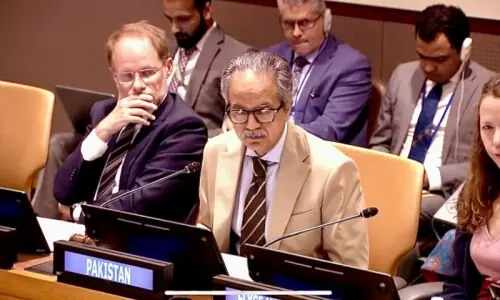
Along with taking kinetic action, Pakistan has highlighted this grim situation on the world stage. The UN Security Council has condemned the Kohat terrorist attack, calling for the “perpetrators … and sponsors” of the atrocity to be brought to justice. Pakistan had earlier told the UNSC that it would respond to threats originating from Afghanistan in self-defence. Moreover, the deputy prime minister, while speaking at a meeting of the OIC contact group on Afghanistan on the sidelines of the ongoing UN General Assembly session, reiterated the need for a verifiable mechanism to prevent the use of Afghan soil for terrorism. China, as well as Muslim states such as Saudi Arabia and Qatar, has backed diplomatic efforts to resolve the differences between Kabul and Islamabad.
While hostilities are undesirable, if the Afghan Taliban take no action against those who spill innocent blood in this country, Pakistan will have no option but to take action to defend itself against terrorism.
Yet while immediate threats must be confronted, long-term peace can only come through dialogue, and a commitment by the Taliban to curb cross-border terrorism. As has been highlighted in these columns previously, a bevy of terrorist groups call Afghanistan home, and pose a threat to the whole region, not just Pakistan — although this country, owing to its physical proximity, has been hit the hardest.
Therefore, only a sustained and coordinated regional effort can succeed in eliminating the terrorist threat emanating from Afghanistan. It is clear that, ultimately, the Taliban must decide whether they want to integrate with the rest of the region, or remain a pariah regime because of their stubborn ideological attachment to their violent comrades.
Published in Dawn, September 24th, 2026