India’s killer tourists


THE date was January 2024, and Israel’s destruction of Gaza was underway for all to see. Among the Israeli soldiers demolishing Palestinian homes was a man named Eitan Gilboa. In videos obtained by the Hind Rajab Foundation, which analyses publicly available data to identify Israeli soldiers it alleges are implicated in war crimes, Gilboa and his unit can be seen detonating residential buildings and celebrating their destruction.
The foundation alleges that in June of the same year, Gilboa was in Rafah ordering the demolition of multiple buildings and in July was involved in another demolition. It argues that Gilboa’s actions — and the actions of thousands of Israeli soldiers who took part in similar mayhem — are in violation of the Fourth Geneva Convention.
Where do these Israeli war criminals go to ‘rest’ after destroying the lives of innocent Palestinians? Many go to India, following a backpacking route so well known for hosting Israeli soldiers that it is called the ‘Hummus Trail’. It stretches through destinations like Kasol and the Parvati Valley, Dharamkot and Tosh in Himachal Pradesh and on to places like Pushkar in Rajasthan, and Goa. Around 80,000 Israeli soldiers are said to travel there annually.
This is also where Gilboa went. The path of guest houses frequented by Israeli travellers is well established and Indians have gone through a lot of trouble to accommodate them. Attractions include raves where visitors can lose themselves in trance music and drugs.
So established is this trade in providing peace and ‘healing’ that one writer called towns on the Hummus Trail the “ashrams for war criminals”. Dharamsala even boasts of a ‘mini-Israel’, where shopkeepers speak Hebrew and serve Israeli food. In 2015, a cafe in Kasol was accused of refusing to serve Indian customers while admitting white tourists.
Israeli soldiers reviled in other parts are welcome in India.
The most important thing that India provides is absolution. Here, Israeli soldiers condemned and excoriated in most other parts of the world, are welcome. They can partake of a commercialised, tourist-friendly mix of ‘healing’ from the trauma of war, without having to take accountability for their actions in Gaza.
Gilboa was no different. The Hind Rajab Foundation analysed photographs and other material from his Indian journey and filed complaints with the Himachal police, the home ministry and the Bureau of Immigration seeking his arrest. No arrest followed and Gilboa eventually left India.
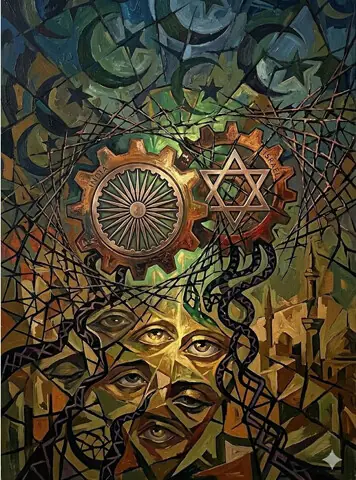
India’s ties with Israel run deep and increasingly point to an ideological, economic and military alignment. Hindutva’s founder Vinayak Damodar Savarkar praised the idea of a Jewish state in Palestine, describing Palestine as the Jews’ “Fatherland and Holyland”. Zionism’s blend of attachment to a motherland and religious attachment to a holy land was precisely what Savarkar wanted for Hindus.
Modi’s India in this sense is like Zionist Israel. India’s Citizenship Amendment Act created an expedited route to citizenship for specified non-Muslim migrants from neighbouring countries while excluding Muslims from its provisions. Israel’s 2018 nation-state law similarly privileged Jewish national identity by declaring that the right to national self-determination in Israel is unique to the Jewish people.
In contemporary India, the state supports these Israeli enclaves on the Hummus Trail even as it punishes people for expressing their support for Palestinians. An editorial published in The Edict, a newspaper at Ashoka University, noted how eager Hindutva supporters want to fraternise with Israeli tourists, imagining their shared hostility towards Muslims as a natural alignment, while some Israeli travellers treat brown Indians as lesser locals there to serve them. In Pushkar, The Edict reported that the Chabad House has Hebrew signage and a perimeter fence, with Indians facing restrictions on entry while white tourists were admitted with less scrutiny.
So India welcomes Israeli soldiers on their ‘healing journeys’, including those facing allegations of war crimes. The Indian state — as evidenced by Prime Minister Narendra Modi’s eager embrace of Israeli officials — is keen to emphasise the closeness of the two countries. In his speech at the Knesset, Modi even peddled yoga and ayurveda as sources of holistic wellness that Israelis could partake in when they visited India.
This, then, is the tale of two hatreds. Men like Eitan Gilboa, accused of participating in the destruction of civilian homes, can leave Gaza and seek succour in a new environment where they can forget the cruelties of war. Hosting those accused of such acts without demanding accountability raises its own moral questions, but this is a truth that India, drowning in its own hatreds, appears unable to acknowledge.
The writer is an attorney teaching constitutional law and political philosophy.
Published in Dawn, September 26th, 2026