Bangladesh’s dying rivers

IN the mid-1960s, a survey conducted by a Dutch company for the East Pakistan Inland Water Transport Authority found 12,000 kilometres of navigable waterways across what is now Bangladesh. Today, at the height of monsoon, only about 4,500 km of these waterways remain navigable, which shrinks to 2,500 km during dry seasons — a loss of more than 60 percent navigability over six decades or so.
Several major inland routes, once busy with launches and cargo, have been officially abandoned by the Bangladesh Inland Water Transport Authority (BIWTA) because the water simply isn’t there to carry these anymore.
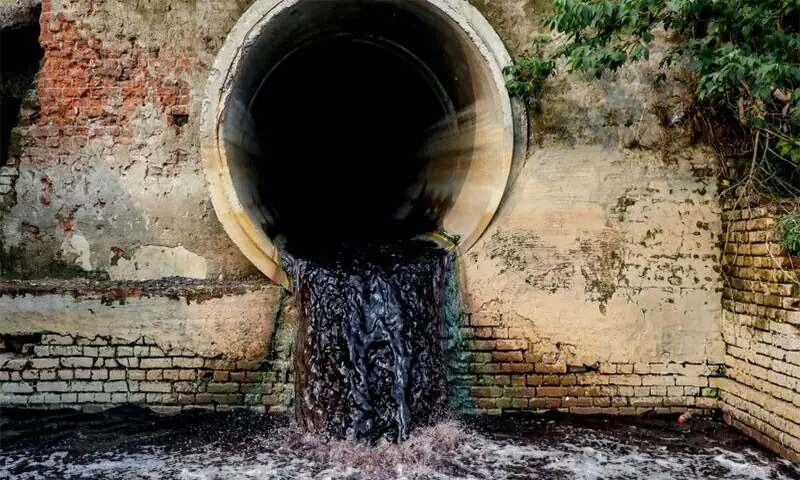
The crisis has two faces, and they compound each other. One is disappearing navigability and the other is pollution. A survey released by BIWTA this year has now measured the pollution in Dhaka’s rivers with precision: 424 discharge points release roughly 330,000 kg of liquid and solid waste daily into the Buriganga, Turag, Balu, and Shitalakhya. Industries account for nearly 60pc of the discharge; drainage systems account for another 30pc, and households the remaining 10pc. Of the roughly 7,000 industrial establishments operating along these rivers, an estimated 99pc lack a functioning effluent treatment plant (ETP).
The problem is not that nothing has been done. It’s that the wrong things have been done, repeatedly, in the wrong order. One of them is dredging without a plan.
Six years ago, the government undertook a plan to dredge rivers and restore 10,000 km of navigable route. Some of this work — cutter suction dredging in Sunamganj’s Surma and Kushiyara over the past two to three years — has revived trade at Barachhara, Charagaon, and Bagli customs stations. But the wider record of success is bleaker. In 2019, the Implementation Monitoring and Evaluation Division (IMED) of the planning ministry found irregularities in several river dredging projects worth nearly Tk 5,000 crore. It also found that some stretches of certain river routes were dredged more than once because the silt was dumped on river banks instead of being hauled away. So, it washed back into the river during the monsoon. Such actions cannot be called river management. It is river mining, funded annually but not really solving the loss of navigability.
Meanwhile, we now know the points through which toxic pollutants enter the river system in Dhaka. The new BIWTA survey traces pollution to its source: 66 WASA drains feeding directly into the Buriganga and Turag; 21 outlets from Dhaka South City Corporation, 16 from Dhaka North, and 37 Narayanganj City Corporation drains discharging straight into the Shitalakhya.
The outcome of this pollution has been critical both ecologically and health-wise. The dissolved oxygen in the Buriganga approaches zero at times — well below the roughly 5 mg/L needed to sustain fish. Besides, researchers have detected antibiotic residues in the river’s water, including amoxicillin and ciprofloxacin, raising concerns about antimicrobial resistance building in a river that flows by a city with more than two crore residents. Environmental architect Iqbal Habib put the core failure plainly: Dhaka’s sewage still flows into its rivers through drains, and building treatment plants without reconnecting the canal network and redesigning the drainage system will not solve the problem.
However, river pollution is not just Dhaka’s crisis. The Department of Environment monitors dozens of stations on 28 rivers nationwide, and the picture beyond the capital is no better. A 2022-23 Rivers and Delta Research Centre (RDRC) survey of 56 rivers found that dissolved oxygen in the Labandaha in Gazipur, Haridhowa in Narsingdi, and Sutang in Habiganj was below 1 mg/L.
Published in Dawn, September 28th, 2026