Sindh forensic science lab to be operational by year end, meeting told


KARACHI: The progress towards establishing a modern forensic science laboratory in Sindh and the digitisation and automation of the Sindh Criminal Prosecution Service was reviewed here at a meeting on Tuesday.
The meeting, which was held at the Sindh Assembly Building and was chaired by the provincial assembly’s Standing Committee on Home chairperson Faryal Talpur, was attended by Home and Law Minister Ziaul Hassan Lanjar, Adviser on IT Ali Rashid, MPAs Sohail Anwar Siyal and Qasim Siraj Soomro, Prosecutor General Sindh Barrister Syed Ghulam Shabir Shah, Additional Chief Secretary Home Muhammad Iqbal Memon, Secretary Health, Additional IG Karachi, senior government officials and forensic and technical experts.
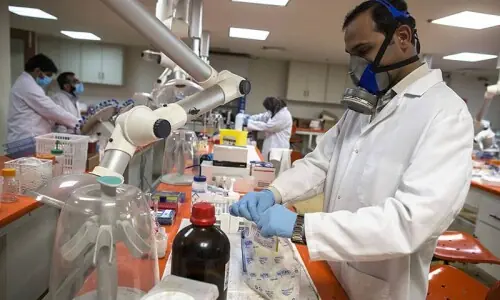
The meeting was informed that construction of the forensic laboratory building was nearing completion and the facility was expected to become fully functional by December 2026.
The participants held detailed discussions on the laboratory’s infrastructure, organisational and operational framework, scientific disciplines, equipment requirements, recruitment of qualified personnel, specialised training, quality assurance, and international accreditation.
Faryal Talpur says use of technology will ensure faster, transparent justice delivery
It was shared that the proposed facility, once functional, would provide a range of forensic services, including DNA and biological examination, fingerprint analysis, toxicology and drug testing, firearms and ballistics examination, crime-scene analysis, evidence recovery and preservation, and digital and computer forensics.
International experts briefed the meeting on global practices for establishing and operating multidisciplinary forensic laboratories and discussed international models relevant to law-enforcement agencies, prosecution services and judicial institutions.
A phased roadmap covering assessment and planning, organisational and workflow design, procurement and implementation, recruitment and training, validation of scientific methods, quality-management systems and international accreditation was also discussed.
The additional chief secretary-home informed the meeting that work on the laboratory building was in its final stages, and efforts were being made to make the facility fully operational by December.
Ms Talpur said the project should not be viewed merely as the construction of a laboratory building but as the development of a credible scientific institution capable of providing police, prosecutors and courts with timely, reliable and scientifically verifiable evidence.
She directed the home department, police, prosecution, health department and other relevant institutions to work in close coordination so that infrastructure, technology, human resources, training and operational protocols were developed simultaneously.
Digitisation and automation
The meeting also reviewed the digitisation and automation of the Sindh Criminal Prosecution Service.
The prosecutor general gave a detailed presentation on the proposed ‘Prosecution Case Management System’ (PCMS), including its objectives, data requirements, phased implementation, district-wise rollout, IT structure and future roadmap.
The meeting was informed that the system was being designed to provide digital tracking and institutional oversight throughout the prosecution lifecycle, from registration of an FIR and investigation to submission of challan, prosecutorial scrutiny, trial, judgement and subsequent appellate proceedings.
The proposed system would enable authorities to monitor the status of FIRs, pending challans, persons in custody, prosecutorial scrutiny, trial progress, hearing schedules, judgements and other key stages of criminal cases.
Officials said the system would help identify delays and bottlenecks and provide decision-makers with reliable data for improved case management, institutional accountability and coordination between investigators and prosecutors.
According to the Sindh prosecutor general the meeting marked “a new beginning” for Sindh in its efforts to modernise forensic science, criminal investigation and prosecution.
Ms Talpur said the use of technology should ultimately result in faster, transparent and more effective delivery of justice to citizens.
Published in Dawn, September 30th, 2026