Ahead of deal on Hormuz, US and Iran ramp up the rhetoric again
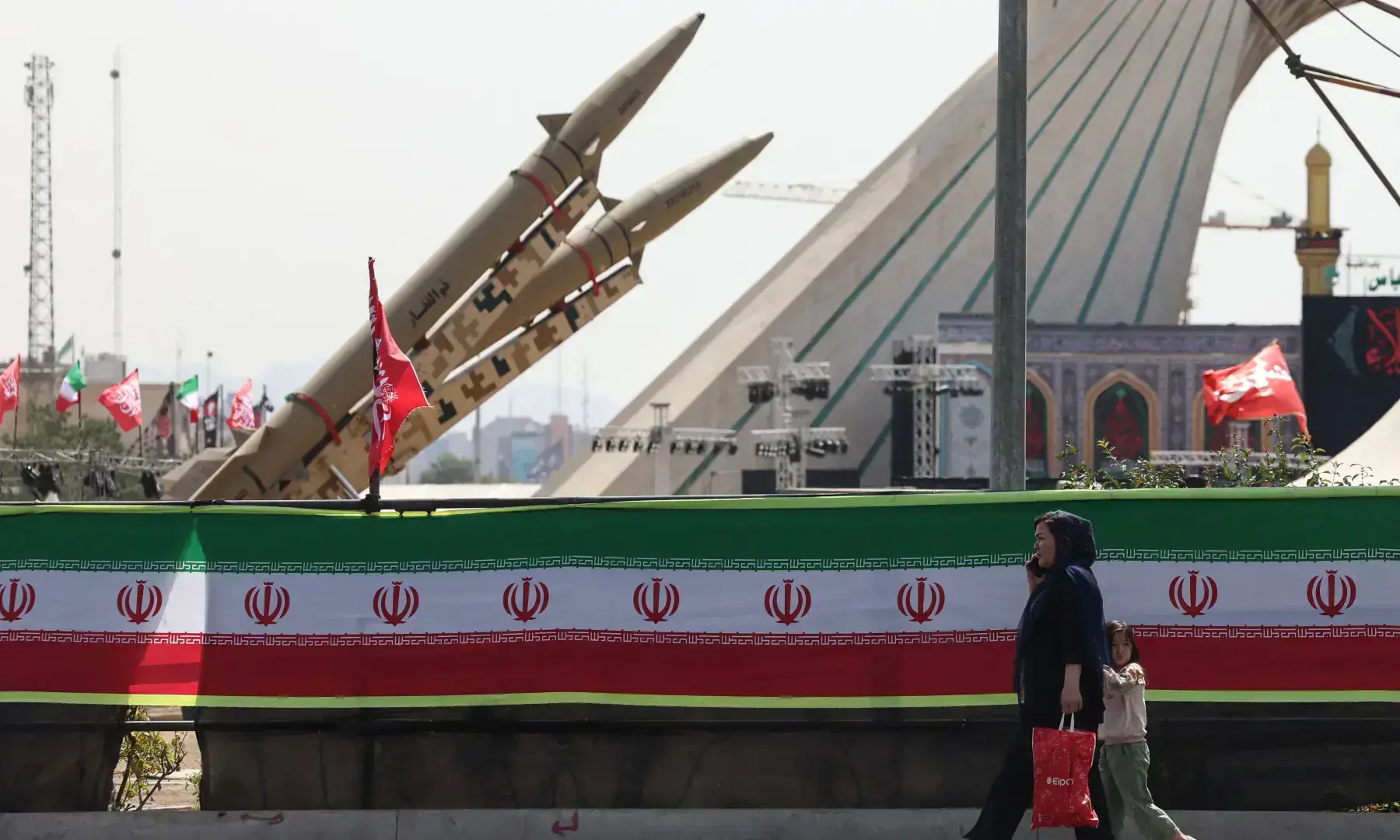

• Tehran awaiting formal reply to its proposal to reopen troubled strait; Qatari mediators trying to find common ground
• Ghalibaf warns of fresh strikes if provoked; IRGC urges American voters to oppose war
• Oil prices fall as Saudi Arabia resumes loading at Yanbu port; US offers 40m barrels from strategic reserve to rein in soaring fuel prices
• Turkiye seizes Iranian plane; Iraqi airlines granted exemption to ferry pilgrims to Najaf
WASHINGTON / TEHRAN: Ahead of a possible agreement over the Strait of Hormuz, both the US and Iran turned up the rhetoric against each other, with President Donald Trump once again expressing confidence that the war in the Middle East will end “very, very soon”.
Iranian state media quoted Foreign Minister Abbas Araghchi as saying that he expected a formal answer on Tuesday to Tehran’s proposal to open the troubled waterway.
The remarks came as the British maritime agency reported that an “unknown projectile” struck a ship in the strait, sparking a fire on board that was subsequently extinguished.
Qatari intermediaries “presented ideas, and we discussed them; they are set to raise the matter with the American side once more, after which the final US response will be conveyed to us”, Araghchi had said late on Monday night.
Mr Araghchi, who is in New York for the UN General Assembly, said the current focus was solely on the Strait of Hormuz, and the reopening of the strait was contingent upon the fulfilment of certain conditions that they have communicated to “the other side”.
Earlier, US and Iranian officials spoke separately with mediators on Monday as part of a renewed effort to end the seven-month war, according to officials of both countries.
On Tuesday, Qatari foreign ministry spokesperson Majed Al Ansari said there had been “several meetings and messages have been exchanged, including some in New York and earlier. Current efforts are focused on building common ground between the parties.”
As a precondition for ending its blockade, Iran is demanding a seven-day ceasefire across the Middle East, including in Lebanon, where its ally Hezbollah is regularly bombed by Israel.
It is also demanding the unfreezing of its assets abroad, the lifting of sanctions on its oil sector and an end to the US naval blockade on its ports.
However, President Trump claimed that he had offered Iran no concessions, rejecting media reports that cited US officials saying he was willing to ease sanctions and release frozen funds for “concrete” steps regarding Iran’s nuclear programme.
Axios and CNN both reported, citing unidentified US officials, that Trump was willing to give Iran sanctions relief and free Iranian funds as part of a final deal on the condition that Iran showed “concrete progress” on the nuclear issue.
“This is untrue. I offered them NOTHING,” Trump wrote on Truth Social on Monday.
On Tuesday, the Revolutionary Guards said “the US claim that it remains open is false”.
“Sneaking a few hundred barrels of oil through under the cover of darkness — with transponders turned off and at great cost — does not constitute the strait being open,” said spokesperson Hossein Mohebi.
“A truly open strait is one where, as in the past, at least 125 vessels would pass through daily, transporting a minimum of 20 million barrels of oil and petroleum products.
“Any vessel attempting to pass through sustains damage — either we strike it, or it hits a mine,” he added.
Meanwhile, Tehran’s chief negotiator Mohammad Bagher Ghalibaf threatened fresh attacks, saying no infrastructure in the region would be safe if his country’s security was not guaranteed.
“In a region where we cannot sell oil, no one else will sell oil either; or if our security is not guaranteed, no infrastructure will remain safe,” Ghalibaf, who is also Iran’s parliament speaker, said according to a video released by state TV.
Separately, the Revolutionary Guards (IRGC) appealed to US midterm voters to reject President Trump’s policies and accept an offer of peaceful coexistence.
The assertions were made on Tuesday in a 25-page open letter addressed to the American people, urging them to oppose US support for Israel and foreign wars and arguing that Iran and the US could coexist if US policy changed.
The letter accused Trump of concealing the peaceful nature of Iran’s nuclear programme, which Israel in particular sees as an existential threat, and the effectiveness of Tehran’s blockade of Gulf oil.
IRGC spokesperson Hossein Mohebi told reporters he did not expect the letter to affect the US administration’s behaviour some five weeks before the elections, but that voters might hear the message.
Oil prices
Oil prices declined on Tuesday as Saudi Arabia resumed oil tanker loadings from its Red Sea port of Yanbu after restarting operations on the East-West Pipeline, improving the outlook for oil exports from the Middle East.
Brent crude futures were down $1.38, or 1.3pc, to $103.88 a barrel at 1703 GMT, while US West Texas Intermediate crude was down $2.04 or 2.16pc at $90.58. Brent and WTI are headed for monthly gains of around 15pc and 5.7pc, respectively.
The resumption of Yanbu loadings, halted earlier this month after a drone attack on the pipeline, which weighed on global oil prices, was notified by state oil giant Saudi Aramco as it unveiled its October loading schedule.
“ESA satellite imagery captured over the Red Sea on September 27 shows Saudi Arabia loading nearly 10 million barrels of crude oil at Yanbu and Al Muajjiz,” vessel-tracking firm TankerTrackers.com wrote in a post on X on Tuesday. Al Muajjiz is a terminal south of Yanbu.
The White House has urged the European Union to draw down diesel emergency inventories in a bid to lower global prices, sources said. Several European Union member countries have not released as much oil and refined products from reserves as they promised, President Donald Trump’s administration said.
Meanwhile, the Trump administration said on Tuesday it is offering to loan energy companies 40 million barrels of oil from the Strategic Petroleum Reserve, in an effort to control soaring fuel prices that have jumped on the widening war with Iran and Russia’s war on Ukraine.
Airline issues
The US has granted Iraqi Airways, the national carrier, a sanctions waiver allowing it to fly to Iran so it can ferry pilgrims travelling between Iran and Iraq’s holy city of Najaf.
The transport ministry said flights were set to start from Najaf in October, “once the necessary organisational requirements have been fulfilled”.
Meanwhile, Turkish authorities have seized a plane belonging to Iran’s Caspian Airlines at Istanbul Airport , with Turkish and Iranian media linking it to an unpaid three-million-euros($3.4 million) debt.
The seizure took place on Monday after passengers had boarded the Boeing 737, which was waiting to take off when officials detained it on the basis of a court-issued seizure order, Anadolu Agency reported.
Separately, Washington sanctioned 10 individuals and entities that allegedly procured weapons and weapons components for Iran’s Ministry of Defence and Armed Forces Logistics, the US Treasury Department’s website showed on Tuesday.
Published in Dawn, September 30th, 2026