Indian rover begins exploring Moon’s south pole


India began exploring the Moon’s surface with a rover on Thursday, a day after it became the first nation to land a craft near the largely unexplored lunar south pole.
Pragyan — “Wisdom” in Sanskrit — rolled out of the lander hours after the latest milestone in India’s ambitious but cut-price space programme sparked huge celebrations across the country.
“Rover ramped down the lander and India took a walk on the moon!” the Indian Space Research Organisation (ISRO) posted on X, formerly known as Twitter, on Thursday.
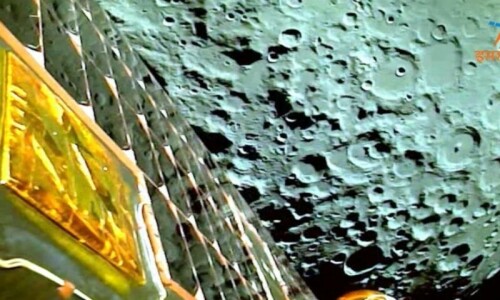
The six-wheeled, solar-powered rover will amble around the relatively unmapped region and transmit images and scientific data over its two-week lifespan.
The successful touchdown of the Chandrayaan-3 ( “Mooncraft-3 “) mission came just days after a Russian lander crashed in the same region.
It also comes four years after the previous Indian lunar mission failed during final descent, in what was seen at the time as a huge setback for its space programme.
However, India is steadily matching the achievements of established spacefaring nations.
Chandrayaan-3 has captivated public attention since launching nearly six weeks ago in front of thousands of cheering spectators.
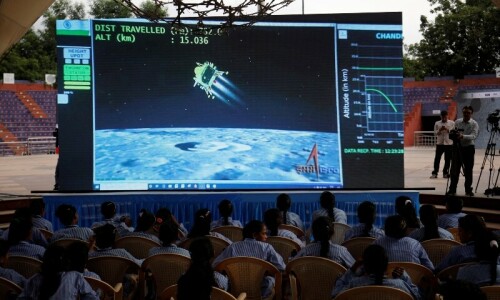
Politicians staged Hindu prayer rituals to wish for the mission’s success and schoolchildren followed the final moments of its descent from live broadcasts in classrooms.
Prime Minister Narendra Modi said on Wednesday that the successful lunar landing — previously achieved only by the United States, Russia and China — was a triumph for “all of humanity”.
Elon Musk, whose firm SpaceX is a leader in commercial space launches, hailed the landing as “super cool”.
The Indian mission took much longer to reach the Moon than the Apollo missions in the 1960s and 1970s, which arrived in a matter of days.
Chandrayaan-3 was launched on a less-powerful rocket and had to orbit the Earth several times to gain speed before embarking on its month-long journey.
Future goals
India has a comparatively low-budget space programme, but one that has grown considerably in size and momentum since it first sent a probe to orbit the Moon in 2008.
Chandrayaan-3 has a cost of $74.6 million — far lower than many missions from other countries and a testament to India’s frugal space engineering.
Experts say India can keep costs low by copying and adapting existing technology, and thanks to an abundance of highly skilled engineers who earn a fraction of their foreign counterparts’ wages.
In 2014, India became the first Asian nation to put a craft into orbit around Mars and plans to send a probe towards the sun in September.
ISRO is slated to launch a three-day crewed mission into Earth’s orbit by next year.
It also plans a joint mission with Japan to send another probe to the Moon by 2025 and an orbital mission to Venus within the next two years.