After Moon landing, India eyes the Sun


Days after becoming the first nation to land a craft near the Moon’s largely unexplored south pole, India’s space agency said on Monday it will launch a satellite to survey the Sun.
“The launch of Aditya-L1, the first space-based Indian observatory to study the Sun, is scheduled for September 2,” the Indian Space Research Organisation (ISRO) said on X, formerly known as Twitter.
Aditya, meaning “sun” in Hindi, will be fired into a halo orbit in a region of space about 1.5 million kilometres (930,000 miles) from Earth, providing the craft with a continuous clear view of the Sun.
“This will provide a greater advantage of observing the solar activities and its effect on space weather in real-time,” ISRO said.
The spacecraft will be carrying seven payloads to observe the Sun’s outermost layers — known as the photosphere and chromosphere — including by using electromagnetic and particle field detectors.
Among several objectives, it will study the drivers for space weather, including to better understand the dynamics of solar wind.
While Nasa and the European Space Agency (ESA) have previously placed orbiters to study the Sun, it will be the first such mission for India.
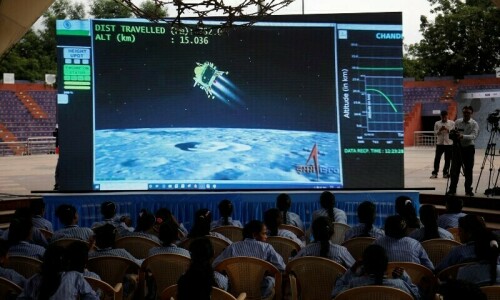
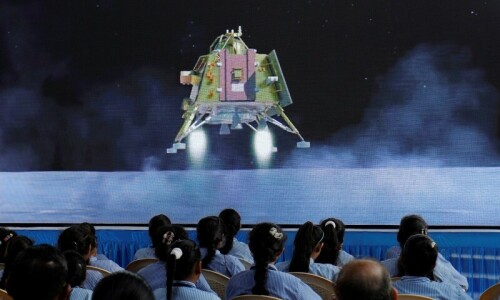
The unmanned Chandrayaan-3 — “Mooncraft” in Sanskrit — touched down on the lunar surface last week, making India only the fourth country behind the United States, Russia and China to land successfully on the Moon.
That marked the latest milestone in India’s ambitious but cut-price space programme, sparking celebrations across the world’s most populous country.
India has a comparatively low-budget space programme but one that has grown considerably in size and momentum since it first sent a probe to orbit the Moon in 2008.
Experts say India can keep costs low by copying and adapting existing technology, and thanks to an abundance of highly skilled engineers who earn a fraction of the wages of their foreign counterparts.
In 2014, India became the first Asian nation to put a craft into orbit around Mars and it is slated to launch a three-day crewed mission into the Earth’s orbit by next year.
It also plans a joint mission with Japan to send another probe to the Moon by 2025 and an orbital mission to Venus within the next two years.