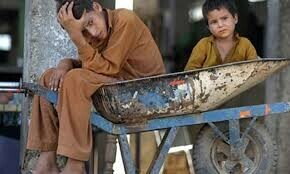
PAKISTAN’s population bomb is not ticking anymore; it has already exploded.
The detailed results of the 2023 digital census published by the government after a year’s delay reveal that the population increased from 207.68m in 2017 to 241.49m in 2023, at one of the world’s highest growth rates of 2.55pc. There have been reservations expressed by some political parties as well as the Sindh government on the way the census was conducted. Many suspect that the 2023 census understates the total population.
If allowed to increase unchecked at the present rate — over thrice as fast as the global average growth rate of 0.8pc — Pakistan’s population might double by 2050. Some conservative estimates, such as the one by the UN, forecast that the numbers will surge to 403m. This will have far-reaching implications for the economy and society, putting an enormous strain on food security, socioeconomic infrastructure and public services. Hence, the urgent need for steps to reduce population growth.
There are two contrasting opinions about the country’s burgeoning population: one views it as a case of rampant poverty and a growing strain on the state’s capacity for public service delivery, while the other touts the increasing numbers as a demographic dividend that can be harnessed to drive faster economic growth, since 67pc of the population is below the age of 30, and 80pc below 40.
The reality is that it is proving to be more of a bane than a boon, as it is a big strain on our already stretched resources, and has made eradication of poverty, hunger, disease and illiteracy a lot more difficult than it should have been. This fact is brought home by Pakistan’s poor ranking on the UNDP’s Human Development Index. With extreme weather events, including destructive floods and droughts, which turn large areas of land uncultivable and uninhabitable and force communities to migrate, disregarding population control is no longer an option.
Pakistan’s exponential population growth may be attributed to several factors: religio-cultural beliefs, social taboos, poverty, female illiteracy, lack of access to birth control and family planning services, etc.
However, many other countries facing similar impediments have successfully overcome their high population growth problem. For example, Bangladesh, which faced a high fertility rate and a rapidly growing population in the 1970s, has brought down its fertility rate to less than two births per woman, and the population growth rate to just above 1pc.
Likewise, India’s growth rate has dropped to 0.8pc. Countries such as Turkiye and Iran have also reduced their fertility rates to 2.1pc and 2.3pc, compared to Pakistan’s 3.2pc.
Their success shows that Pakistan can also control its growth rate by following the examples of its peers and implementing functional family planning programmes and campaigns.
Published in Dawn, July 22nd, 2024