Death toll from mosque survey clashes in India’s Uttar Pradesh rises to 6


The death toll from violent protests in India sparked by a survey into whether a centuries-old mosque was built on a Hindu temple has risen to six, an official said on Tuesday.
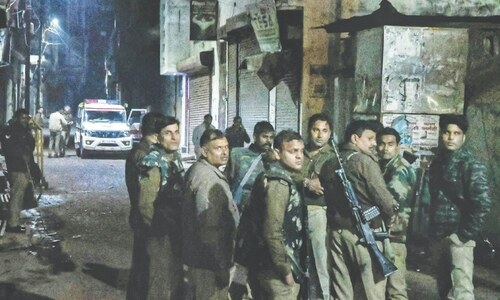
Around 20 police officers were also wounded during the violence on Sunday in Sambhal in India’s northern state of Uttar Pradesh, district magistrate Chirag Goyal told AFP.
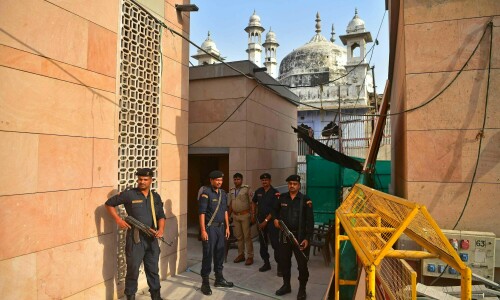
Street battles broke out in a bid to block a team of surveyors from the government’s Archaeological Survey of India (ASI) from entering the Shahi Jama Masjid in Sambhal.
The six Muslim men were killed by gunfire — with Goyal saying they were shot by fellow protesters.
“The six killed were caught in crossfire by rioters using homemade pistols,” he said. “The police only fired tear gas and rubber bullets”.
Two people were initially reported dead on Sunday, but more details emerged later, while others later died of their wounds.
Goyal said 25 people had been arrested following the violence.
Right-wing Hindu groups tend to lay claim to several mosques they allege were built over Hindu temples during the Muslim Mughal empire centuries ago.
The survey in Sambhal was ordered by a local court, after a petition from a Hindu priest this month claimed it was built on the site of a Hindu temple.
Within hours the court ordered a survey of the mosque, a decision protested by local Muslim residents.
The first survey was undertaken on November 19. A second survey four days later, which included taking photos and video of the mosque’s features, triggered the violence.
The hilltop Shahi Jama Masjid was built in 1526 during the rule of Mughal emperors Babur and Humayun, according to historians, with renovations during the 17th century.
Hindu nationalist activists were emboldened earlier this year when Prime Minister Narendra Modi inaugurated a grand new Hindu temple in the northern city of Ayodhya, built on grounds once home to the centuries-old Babri mosque.
That mosque was torn down in 1992 in a campaign spearheaded by members of Modi’s party, sparking sectarian riots that killed 2,000 people nationwide, most of them Muslims.
Some Hindu campaigners see an ideological patron in Modi.
Calls for India to enshrine Hindu supremacy have rapidly grown louder since Modi was swept to office in 2014, making the country’s roughly 210-million-strong Muslim minority increasingly anxious about their future.