FEAR and panic continue to dominate South Asia, with Pakistan and India still engaged in hostilities.
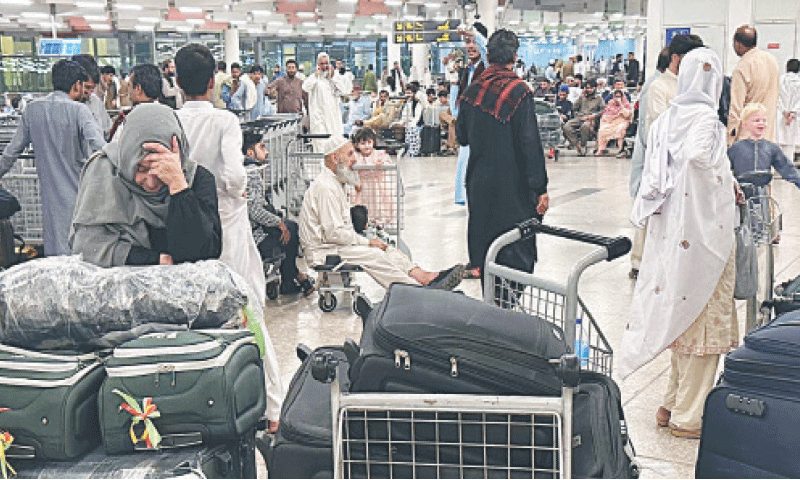
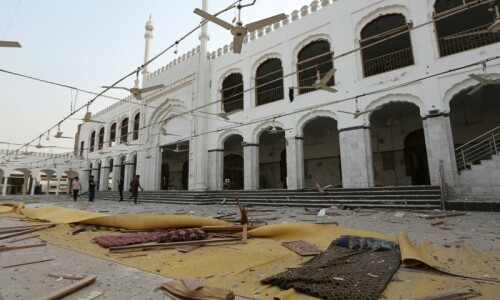
Airports have been shut, exams postponed and markets have been on edge. On Thursday, the military said that 25 Israeli-made Indian drones were shot down over different parts of Pakistan. In some cases, India’s drone attacks led to damage and injuries. While India had struck sites in AJK and Punjab in its initial aggression on May 7, yesterday’s drone targets included Sindh as New Delhi climbed up the escalatory ladder. Indian media outlets claimed that Pakistan attacked targets in held Jammu and Kashmir, but the government has denied this. The fact is that India initiated hostilities against Pakistan on the basis of unproven allegations in the Pahalgam killings, and launched its so-called ‘Operation Sindoor’. Pakistan retaliated by downing five of its jets. It is now time for all to step back from the brink.
India’s defence minister asserted that his country wanted to resolve “problems through dialogue”, while its military stressed its “commitment to non-escalation”. But the fact remains, that India is persisting with its provocative attacks, jeopardising civilian lives on this side of the border. Therefore, its ‘commitment’ to dialogue and non-escalation remains highly questionable.
One positive development on Thursday came in the form of a statement by Deputy PM Ishaq Dar that contacts between both states’ NSAs and DGMOs had been established. Sadly, while foreign friends have counselled restraint, there has been a marked indifference on the part of the international community to actively help defuse the crisis. This indifference is perplexing in a nuclear neighbourhood, as an escalation in hostilities will not remain a bilateral matter, but affect all of South Asia as well as the Middle East.
Therefore, the UN and states that enjoy a good rapport with both Islamabad and New Delhi should play a role in cooling temperatures. President Donald Trump has urged both countries to “stop” the violence, and Secretary of State Marco Rubio spoke to the PM on the matter. Other foreign powers, such as the Gulf states, Iran, and others should also redouble their efforts for a diplomatic solution.
Jingoism is evident in both countries, but elements in India’s media, cultural and political sphere have been egging on their country in the confrontation. Perhaps they think of war in the context of Bollywood action films. The actual reality of conflict is much darker. Even a conventional war would cost countless lives and increase misery on both sides. What a nuclear showdown has in store is too horrific to contemplate. Therefore, sense must prevail, and the march to war should be halted. Along with foreign efforts, the contacts made between the NSAs and DGMOs must continue in order to de-escalate matters and return to a more manageable state of affairs.
Published in Dawn, May 9th, 2025