Turtle rescued with over 1.5 pounds of barnacles and algae
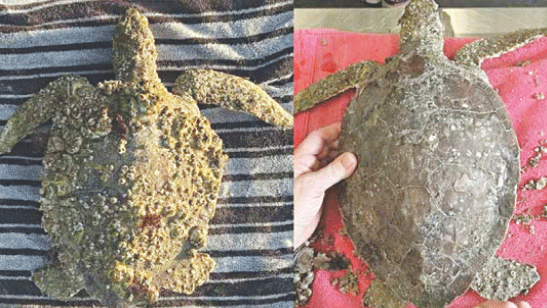
Marine rescuers in North Carolina removed more than 1.5 pounds of barnacles, algae and other organisms from a stranded juvenile green sea turtle.
According to the Cape Hatteras National Seashore, the turtle was taken to the Sea Turtle Assistance and Rehabilitation Centre at the North Carolina Aquarium after being found weighed down by epibiota, organisms that live on the surface of other animals.
“The rehab team gave her an exam and began to clean her up,” officials said.
The turtle is now in recovery and showing signs of improved activity under the aquarium’s care.
Man suffers internal burns after drinking sparkling water

Pablo González from Salvaterra de Miño, Spain, has been hospitalised since April 12 after suffering severe burns to his oesophagus and stomach from a sip of sparkling water at a restaurant. Moments after drinking, he felt intense pain, saw the liquid was yellowish and rushed to rinse his mouth.
Doctors confirmed internal burns, likely spared his mouth due to quick rinsing. He couldn’t eat or drink for nearly 15 days and is still recovering, with his oesophagus severely damaged.
The cause remains unknown. Police are analysing the bottle, suspecting contamination, possibly from a cleaning agent, though the restaurant denies this.
World’s first T-Rex leather handbag
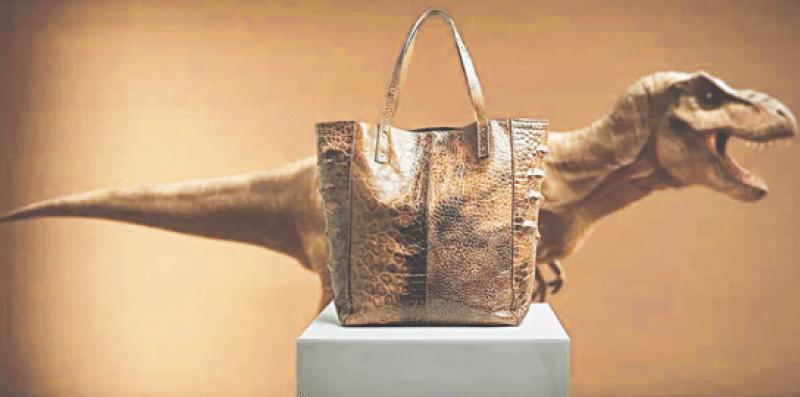
Three companies — VML, The Organoid Company and Lab-Grown Leather Ltd., have teamed up to create the first-ever T-Rex leather handbag using lab-grown material inspired by dinosaur DNA. Based on a collagen protein found in an 80-million-year-old Tyrannosaurus fossil, scientists engineered a synthetic gene to grow a skin-like structure mimicking the durability of T-Rex skin.
The cruelty-free, chemical-free leather is made using a scaffolding-free method in a controlled lab setting, offering a sustainable alternative to traditional leather. The luxury handbag is set to launch later this year, with pricing yet to be revealed.
The world’s stinkiest bird
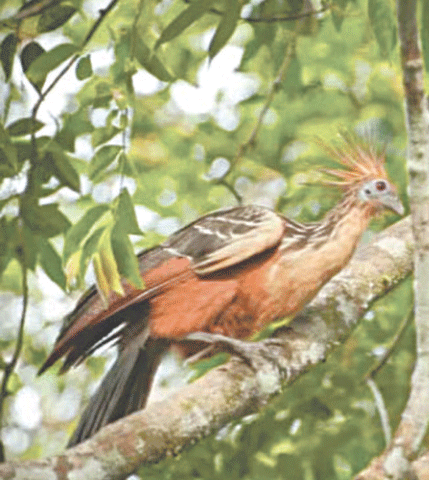
The hoatzin, a pheasant-like bird native to the Amazon, is known as the world’s stinkiest bird due to its manure-like odour. This smell comes from its unique digestive system — the only bird to use foregut fermentation, similar to cows. The process produces methane-rich burps and smelly droppings.
Hoatzins eat only plants, which ferment in their oversized crop, taking about 45 hours to digest. The crop is so large that it limits flight, so adults mainly hop or climb using clawed wings, a rare trait in birds.
Their strong odour deters most predators, though some still hunt them. In 2024, genetic studies showed the hoatzin doesn’t fit into any known bird group, highlighting its evolutionary uniqueness.
Published in Dawn, Young World, June 6th, 2025