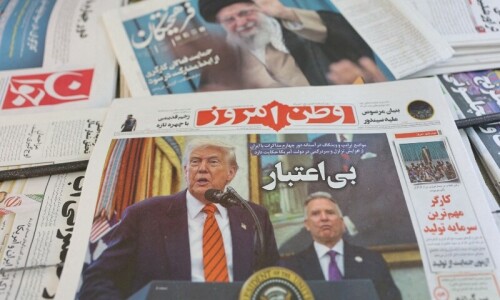
US assessment finds Iran years away from nuclear weapon, refutes Israeli claims

As Iran and Israel warned on Tuesday of intensifying their attacks against each other after Tel Aviv attacked Tehran last Friday, a US intelligence assessment found that Iran was not actively pursuing a nuclear weapon programme and was “years away from producing one”, a report from CNN released on Tuesday claimed.
After months of attacking Gaza — flattening homes, targeting hospitals, and starving a besieged population — Israel expanded its assault by launching wide-scale air strikes against Iran’s nuclear facilities, military sites and private residences last week, killing top commanders, scientists and civilians.
Israeli officials have claimed the strikes are part of a broader operation codenamed ‘Rising Lion’ to deter Tehran’s nuclear ambitions, which the latter has consistently denied, saying its uranium enrichment programme is for civilian purposes.
“Not only was Iran not actively pursuing a nuclear weapon, it was also up to three years away from being able to produce and deliver one to a target of its choosing, according to four people familiar with the assessment,” CNN reported.
This lies in complete contrast with Israeli claims used as a casus belli for the invasion. Israeli Prime Minister Benjamin Netanyahu had said in a recorded video message: “We are at a decisive moment in Israel’s history.
“Moments ago, Israel launched Operation Rising Lion, a targeted military operation to roll back the Iranian threat to Israel’s very survival. This operation will continue for as many days as it takes to remove this threat.”
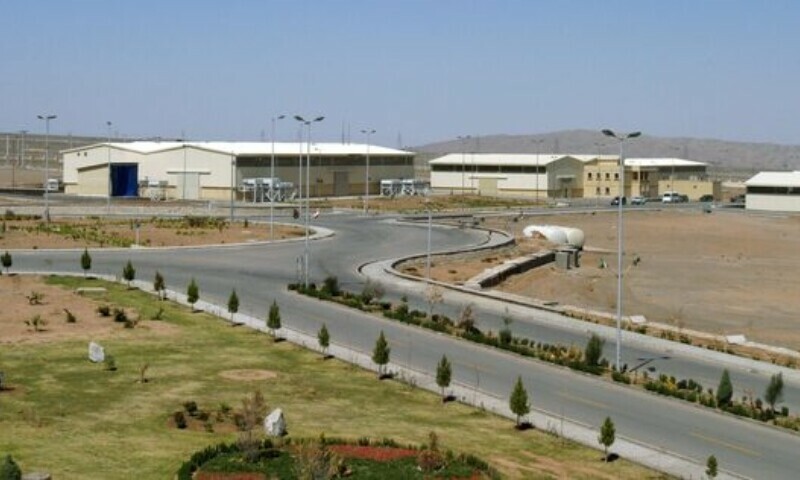
An Israeli military official added that Israel was striking “dozens” of nuclear and military targets, including the facility at Natanz in central Iran. The official had claimed Iran had enough material to make 15 nuclear bombs within days.
Now, after days of Israeli airstrikes, US intelligence officials believe that so far, Israel may have set back Iran’s nuclear programme by only a matter of months, according to one of those people, CNN quoted a US official as having said.
“Even as Israel has done significant damage to Iran’s facility at Natanz, which houses centrifuges necessary to enrich uranium, a second, heavily fortified enrichment site at Fordow has remained effectively untouched,” the report added.
Israel possesses around 90 nuclear warheads, according to the US-based Centre for Nuclear Arms Control and Non-Proliferation. There are multiple United Nations (UN) resolutions concerning Israel’s nuclear arsenal, including UN General Assembly Resolution 41/93 (1986) , which urged Tel Aviv to renounce its weapons and place its facilities under International Atomic Energy Agency (IAEA) safeguards.
Meanwhile, the BBC reported that regarding Israeli claims of an Iranian nuclear bomb being only a month away, Kelsey Davenport, director for nonproliferation policy at the US-based Arms Control Association, said that Israel “did not present any clear or compelling evidence that Iran was on the brink of weaponising”.
She further told the outlet that Iran “has been at a near-zero breakout for months”, referring to the time it would take Iran to acquire enough fissile material for one bomb if it chose to do so.
Davenport added that assessments and estimates of Iran being only some months away from a bomb were “not new”.
Israel was able to produce nuclear weapons by the end of the 1960s. It is estimated that there are about 90 plutonium-based nuclear warheads in this country and that Israel has produced enough plutonium for 100-200 weapons.
Tel Aviv is not a party to the Nuclear Non-Proliferation Treaty — a 1970 accord aimed at preventing the spread of nuclear weapons, promoting disarmament, and ensuring the peaceful use of nuclear technology, whereas Iran is a signatory to the treaty.