Pakistan adopts ‘measured’ tone on Iran strikes
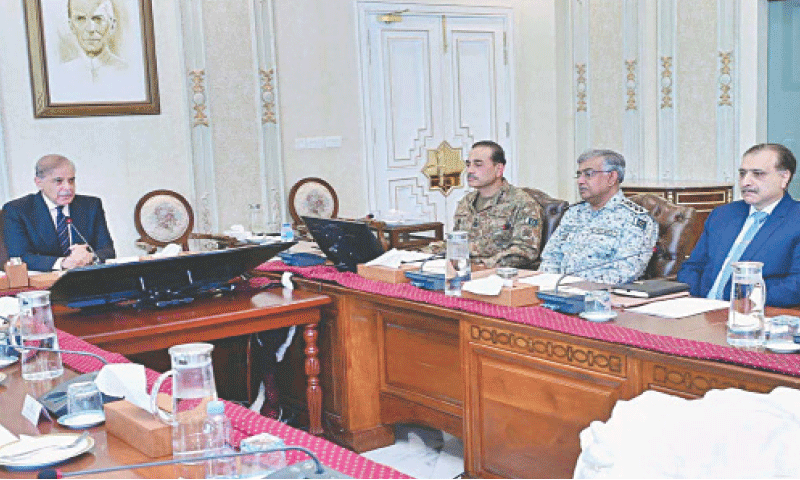

• Islamabad aligns its messaging with regional Arab states; NSC refrains from directly naming US as aggressor, signalling strategic move to avoid direct confrontation with Washington
• In late night call with envoys, PM expresses solidarity with Qatar, Saudi Arabia
ISLAMABAD: A more restrained version of Pakistan’s stance on US airstrikes targeting Iranian nuclear facilities emerged on Monday following a high-level meeting of the National Security Committee (NSC), where the country’s top political and military leadership recalibrated its position.
The shift from the Foreign Office’s earlier explicit condemnation of the US strikes and its affirmation of Iran’s right to self-defence, to the NSC’s more cautiously worded concern was accompanied by a diplomatic overture offering Pakistan’s services as a mediator in the US-Iran conflict, citing its longstanding ties with both countries.
This new posture places Islamabad in closer alignment with Arab states in the region, many of which host US military bases that were hours later hit by retaliatory Iranian strikes and have similarly avoided criticising Washington. Like them, Pakistan expressed concern over the situation and called for de-escalation, rather than directly attributing blame.
“The NSC expressed grave concern over the potential for further escalation after the attacks on Iranian nuclear facilities in Fordow, Natanz, and Isfahan on June 22 which violated the resolutions of the International Atomic Energy Agency (IAEA), relevant international law, and the UN Charter,” the official statement read after the meeting, which was convened to deliberate on the growing crisis.
While it was initially believed that the government’s response had already been set and that the meeting would address the fallout of the strikes, the session appears to have served a different purpose — softening the language of the official position.
Crucially, the NSC statement did not identify the United States as the aggressor in the attacks on Iran’s nuclear infrastructure, a significant and deliberate omission. The absence of attribution underscored a strategic shift, with Islamabad signaling its intent to avoid direct confrontation with Washington while still acknowledging the regional stakes.
The NSC’s formulation now sets the policy framework for the government’s handling of the crisis — sidestepping overt criticism of the US, while voicing principled concern through legal and diplomatic language especially on issues like nuclear infrastructure and right of self-defence, which carry direct relevance for Pakistan’s own regional security.
Beyond softening its tone, the NSC also sought to seize an emerging opportunity and positioning Pakistan as a possible intermediary between Tehran and Washington.
“The NSC also reaffirmed Pakistan’s close engagement with relevant parties and endorsed its readiness to further continue efforts and initiatives aimed at promoting regional peace and stability.”
While Pakistan has long aspired to play the role of a peace facilitator in regional crises, this latest offer appears largely symbolic. The NSC statement offered no roadmap, no proposed mechanism, and no immediate diplomatic initiative to back up the mediation pitch. Moreover, given the deep mistrust between Israel, Iran, and US, and American insistence on Iran’s complete nuclear capitulation, the suggestion appears aspirational rather than actionable.
The rest of the NSC statement largely echoed Pakistan’s traditional diplomatic themes. It “strongly condemned Israel’s acts of aggression” and described the attacks as “reckless actions” that threatened to “ignite a wider conflict.”
It also expressed regret that the strikes “coincided with a constructive negotiation process between Iran and the United States,” reinforcing Islamabad’s preference for diplomacy over force. The NSC reaffirmed Iran’s right to self-defence under the UN Charter, called for dialogue in line with international law, and urged all parties to respect humanitarian norms.
PM calls envoys
Late on Monday night, PM Shehbaz phoned the Qatari and Saudi envoys to Pakistan and expressed solidarity with the two nations after Iran’s retaliatory attacks on US bases.
The PM told the Qatari envoy, Ali Mubarak Ali Essa Al-Khater, that all efforts must be made to de-escalate tensions and restore peace in the region.
The Qatari ambassador thanked the PM for reaching out in this critical time.
In his call with Nawaf bin Saeed Al Malkiy, the ambassador of Saudi Arabia, PM Shehbaz said all efforts must be made to de-escalate tensions and restore peace in the region. In this regard, he said, Pakistan would continue to work closely with Saudi Arabia to intensify peace efforts.
The Saudi ambassador agreed that both countries must continue to work together to ensure an early peaceful settlement of the ongoing conflict.
Published in Dawn, June 24th, 2025