WHO sees no reduction in Gaza hunger since truce

GENEVA: The World Health Organisation said on Thursday there had been little improvement in the amount of aid going into Gaza since a ceasefire took hold — and no observable reduction in hunger.
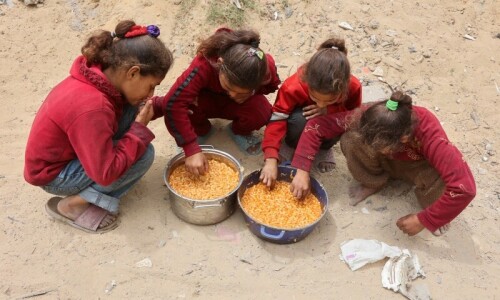
“The situation still remains catastrophic because what’s entering is not enough,” WHO chief Tedros Adhanom Ghebreyesus told an online press briefing from the UN health agency’s headquarters.
Since the US-brokered ceasefire between Israel and Hamas came into effect on October 10, there has been “no dent in hunger, because there is not enough food”, he warned.
Israel repeatedly cut off aid to the Gaza Strip, exacerbating dire humanitarian conditions. The United Nations said that it caused a famine in parts of the Palestinian territory.
Since the start of 2025, 411 people are known to have died from the effects of malnutrition in Gaza, including 109 children, Richard Peeperkorn, the WHO’s representative in the Palestinian territories.
“All of these deaths were preventable,” stressed Teresa Zakaria, WHO’s unit head for humanitarian and disaster action. More than 600,000 people in Gaza were currently facing “catastrophic levels of food insecurity”, she added.
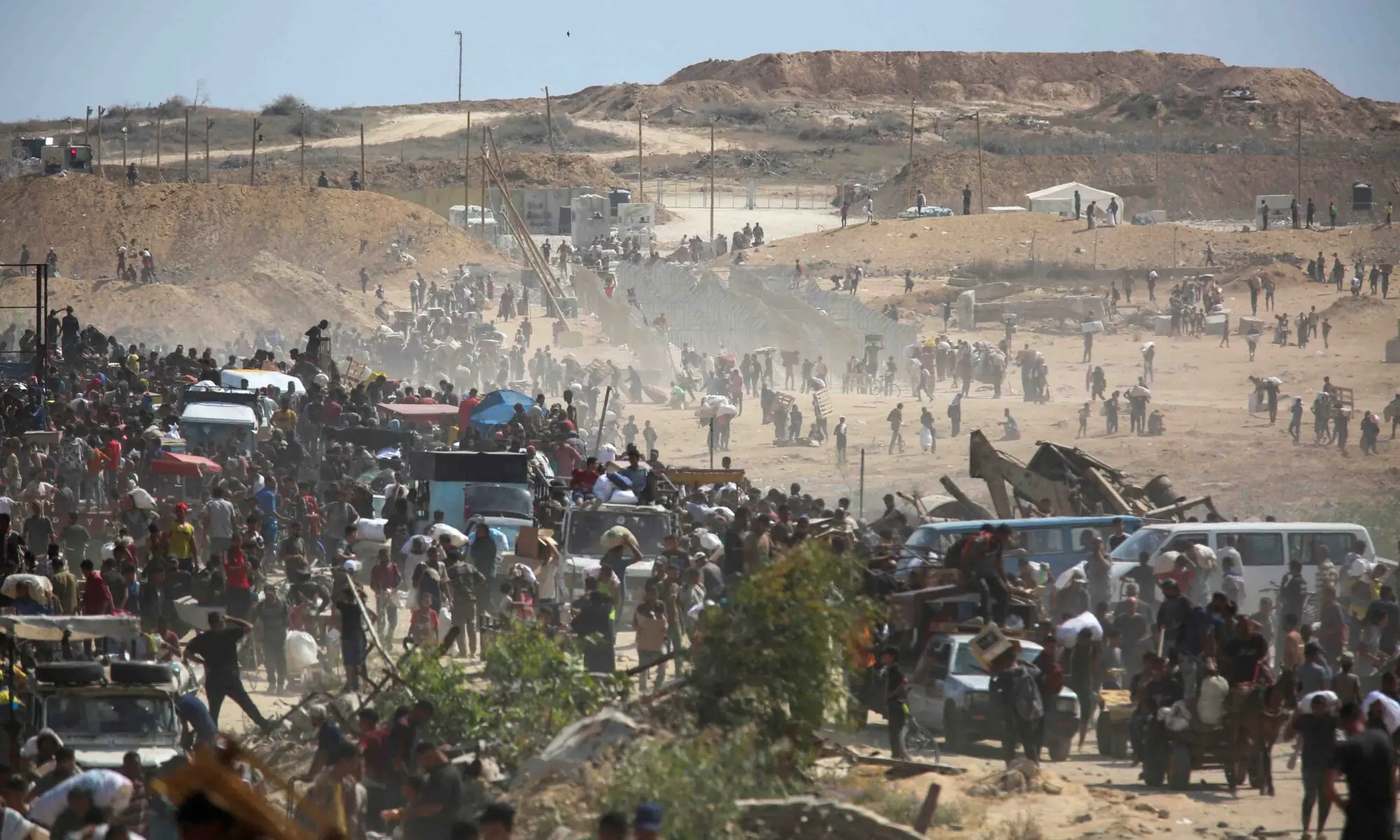
But while the agreement brokered by US President Donald Trump provides for the entry of 600 trucks per day, Tedros said currently only between 200 and 300 trucks are getting in daily.
And “a good number of the trucks are commercial”, he said, when many people in the territory have no resources to buy goods.
“That reduces the beneficiary size,” he said.
15,000 awaiting evacuation
The WHO chief hailed the fact that the ceasefire was holding despite violations, but warned: “The crisis is far from over, and the needs are immense.
“Although the flow of aid has increased, it’s still only a fraction of what’s needed,” he added.
Citing figures from the health ministry in Hamas-run Gaza, WHO health emergencies incident manager Nabil Tabbal said 89 people had been killed and some 317 wounded since the ceasefire took hold.
Gaza’s health system has been ravaged during Israel’s two-year bombing in the Palestinian territory following Hamas’s October 2023 raid.
Tedros warned that “the total cost for rebuilding the Gaza health system will be at least $7 billion”.
“There are no fully functioning hospitals in Gaza, and only 14 out of 36 are functioning at all. There are critical shortages of essential medicines, equipment and health workers,” Tedros said.
“More than 170,000 people have injuries in Gaza, including more than 5,000 amputees and 3,600 people who have major burns,” he pointed out.
He said that since the ceasefire took effect, WHO had been sending more medical supplies to hospitals, deploying additional emergency medical teams and striving to scale up medical evacuations.
The agency had facilitated the evacuation of 41 patients and 145 companions on Wednesday.
But he warned that “there are still 15,000 patients who need treatment outside Gaza, including 4,000 children”. Tedros urged more countries to step up to receive patients from Gaza for specialised care. He called on Israel to allow “all crossings to be opened to allow more patients to be treated in Egypt, and to enable the scale-up of aid.
Unexploded ordnance
Clearing the surface of Gaza of unexploded ordnance will likely take between 20 and 30 years, according to an official with aid group Humanity & Inclusion, describing the enclave as a “horrific, unmapped minefield”.
More than 53 people have been killed and hundreds injured by lethal remnants from the two-year conflict, according to a UN-led database, which is thought by aid groups to be a huge underestimate.
“If you’re looking at a full clearance, it’s never happening, it’s subterranean. We will find it for generations to come,” said Nick Orr, an explosive ordnance disposal expert at Humanity & Inclusion, comparing the situation with British cities after World War Two.
“Surface clearance, now that’s something that’s attainable within a generation, I think 20 to 30 years,” he added. Orr, who went to Gaza several times during the conflict, is part of his organisation’s seven-person team that will begin identifying remnants there in essential infrastructure like hospitals and bakeries next week.
Published in Dawn, October 24th, 2025