Trump says second Venezuela strike possible if govt does not cooperate, insists US ‘in charge’
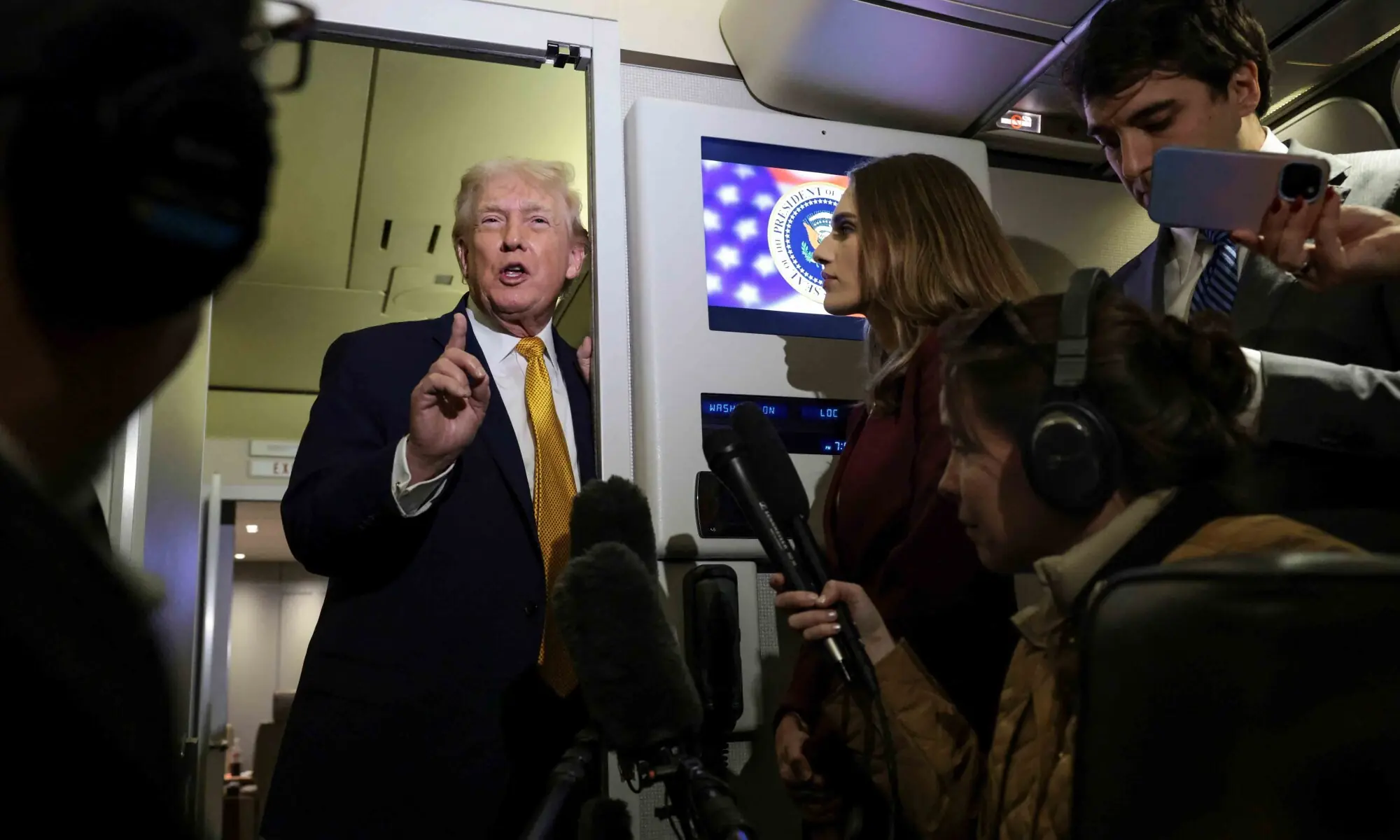

United States President Donald Trump said on Sunday that the US might launch a second military strike on Venezuela following the capture of President Nicolas Maduro if remaining members of the administration do not cooperate with his efforts to get the country “fixed”.
His comments to reporters aboard Air Force One raised the possibility of further US military interventions in Latin America, and suggested Colombia and Mexico could also face military action if they do not reduce the flow of illicit drugs to the United States.
“Operation Colombia sounds good to me,” Trump said. He also said that Cuba, a close ally of Venezuela, “looks like it’s ready to fall” on its own without US military action.
He also insisted the US was “in charge” of Venezuela after the seizure of Maduro, but was also dealing with the new leadership in Caracas.
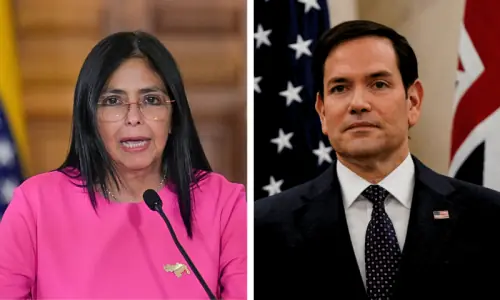
Venezuela’s interim leader Delcy Rodriguez said at the same time that she was ready to work together with the Trump administration, asking the US leader for a balanced, respectful relationship.
“We’re dealing with the people who just got sworn in. Don’t ask me who’s in charge because I’ll give you an answer and it’ll be very controversial,” Trump told reporters on Air Force One when asked if he had spoken to Rodriguez.
Pressed on what he meant, Trump said: “It means we’re in charge”.
Asked whether the operation was about oil or regime change, Trump replied: “It’s about peace on earth.”
The US president said elections in Venezuela would have to wait.
“We’re going to run it, fix it, we’ll have elections at the right time, but the main thing you have to fix is it’s a broken country,” he said.
As he struck his triumphant tone, Trump also had harsh words for other US adversaries, saying Colombia’s leader was “not going to be doing it very long,” Communist-ruled Cuba was “ready to fall” and that Iran’s leadership will be “hit hard” if protesters are killed.
The Trump administration says it is willing to work with the remainder of Maduro’s government as long as Washington’s goals, particularly opening access to US investment in Venezuela’s enormous crude oil reserves, are met.
Maduro is in a New York detention centre awaiting a Monday court appearance on drug charges. His capture by the United States has sparked deep uncertainty about what is next for the oil-rich South American nation.
Top officials in Maduro’s government are still in charge and have called the detentions of Maduro and his wife Cilia Flores a kidnapping.
“Here, there is only one president, whose name is Nicolas Maduro Moros. Let no one fall for the enemys provocations,” Interior Minister Diosdado Cabello said in an audio recording released by the ruling PSUV socialist party.
Images of the 63-year-old Maduro blindfolded and handcuffed stunned Venezuelans. The operation was Washington’s most controversial intervention in Latin America since the invasion of Panama 37 years ago.
Defense Minister General Vladimir Padrino said on state television the US attack killed soldiers, civilians and a “large part” of Maduro’s security detail “in cold blood”.
Venezuela’s armed forces have been activated to guarantee sovereignty, he said.
The Cuban government said 32 of its citizens were killed during the raid.
Vice President Delcy Rodriguez who also serves as oil minister has taken over as interim leader with the blessing of Venezuela’s top court and has said Maduro remains president.
Who will run Venezuela?
Despite the success of the initial US operation, questions mounted over Trump’s Venezuela strategy.
Trump said on Saturday the United States will “run” the South American country of about 30 million people.
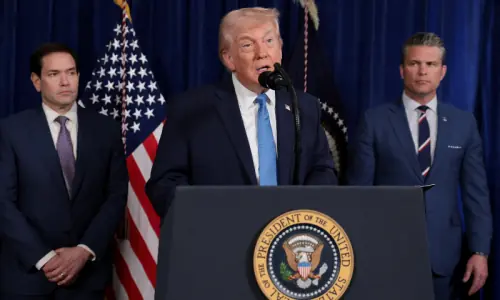
But US Secretary of State Marco Rubio stressed on Sunday that Washington is not seeking complete regime change or elections.
The US is fighting drug traffickers, “not a war against Venezuela,” Rubio told NBC‘s ‘Meet the Press’. However, he said a large US naval presence would remain in the Caribbean to enforce a blockade of Venezuelan oil exports for “tremendous leverage”.
With questions swirling on Capitol Hill, an administration official told AFP that Rubio will discuss Venezuela in meetings with lawmakers Monday.
Trump has made clear Washington intends to call the shots in Venezuela, with a focus on securing access to the world’s largest proven oil reserves.
Maduro, a self-described socialist, led Venezuela with an iron fist for more than a decade through a series of elections widely considered rigged. He came to power after the death of his charismatic mentor, Hugo Chavez.
As news of Maduro’s capture rippled out, exiled Venezuelans waved flags and celebrated in plazas from Madrid to Santiago.
About eight million Venezuelans have fled the grinding poverty and political suppression of their homeland.
Rodriguez has long been considered the most pragmatic member of Maduro’s inner circle. But she has publicly contradicted Trump’s claim she is willing to work with the US.
Trump said Rodriguez may pay a bigger price than Maduro “if she doesn’t do what’s right,” according to an interview with The Atlantic magazine on Sunday.
The Venezuelan communications ministry did not immediately respond to a request for comment on that remark.