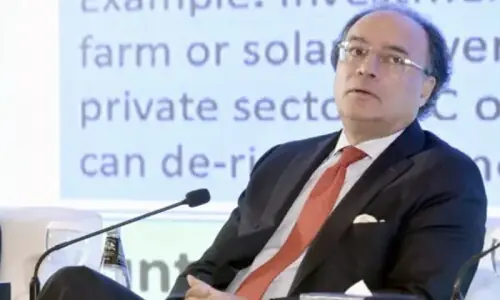
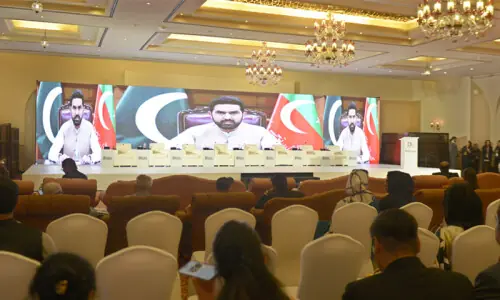
PAKISTAN’S climate debate is finally beginning to move beyond post-disaster calls for aid and donor conferences. Finance Minister Muhammad Aurangzeb has implicitly acknowledged that the era when the world could be expected to step in generously after a climate disaster is effectively over.
His remarks at the Breathe Pakistan Climate Conference on Wednesday were an admission that Pakistan must first demonstrate seriousness at home before looking for external help. This is a welcome shift in the official tone. Until recently, climate vulnerability was seen as a justification for external aid.
But experience shows that post-disaster, global sympathy does not automatically translate into aid flows. Billions of dollars were pledged for rehabilitation after the 2022 floods. Only a fraction materialised. This is not merely donor fatigue. Wealthy nations are preoccupied with wars, energy transitions, and domestic pressures. Foreign assistance today is increasingly driven by strategic interests rather than humanitarian concerns. Countries seeking climate finance are now expected to demonstrate governance credibility, institutional readiness and bankable project pipelines before green capital flows in.
In this context, the minister’s take that the climate funding ball was now largely in Pakistan’s court is correct. The availability of global climate finance is not the issue. It exists through green funds, sustainability linked instruments, concessional windows and private capital markets. The problem is Pakistan’s inability to access it. Inconsistent policy frameworks, poor project preparation and macroeconomic instability undermine access to available financing. This is why Mr Aurangzeb’s emphasis on macroeconomic stability as “basic hygiene” is important.
Climate finance is not insulated from the broader economic reality. Investors and multilateral institutions examine fiscal sustainability, debt vulnerabilities and governance structures before committing long-term funds. A country struggling to maintain economic discipline cannot easily position itself as a credible destination for large-scale green investment.
Equally important was the minister’s emphasis on a whole-of-government approach. Climate risk cuts across agriculture, industry, water management, energy, urban infrastructure, public health and fiscal planning. Domestic resource mobilisation for climate adaptation and clean energy transition is no longer optional. Therefore, the ambitious proposal floated at the conference for a specialised climate bank should be considered.
Our financial system is geared towards short-term, risk-averse lending, while climate adaptation and green infrastructure require patient, long-term capital. The global rise of green bonds, sustainability-linked financing and carbon markets shows climate finance is increasingly becoming part of the mainstream financial architecture.
An institution dedicated to green financing could help private sector transition and expand financing access for homes and businesses investing in adaptation, resilience and clean energy. Unless climate challenge is integrated into mainstream budgeting and development strategies, the vulnerabilities will worsen.
Published in Dawn, May 8th, 2026