Punjab Environment Protection launches real-time air quality dashboard
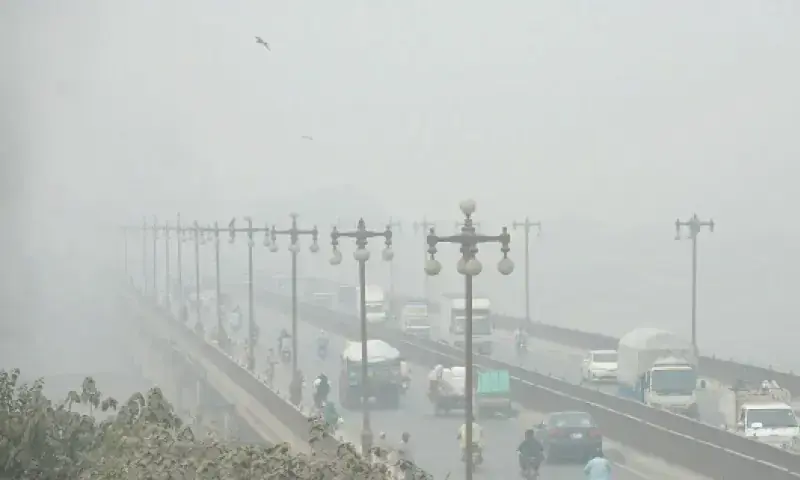

LAHORE: The Punjab Environment Protection and Climate Change Department (EP&CCD) has launched new forecasting and satellite-based features for the province’s real-time air quality dashboard.
The EP&CCD unveiled the new features in collaboration with the International Centre for Integrated Mountain Development (ICIMOD) on the International Day of Clean Air for Blue Skies.
The AQI Punjab Dashboard is the first platform of its kind in Pakistan to receive international recognition from ICIMOD. The platform is fed data from 59 state-of-the-art air quality monitoring stations (AQMS) installed across Punjab and provides real-time air quality information automatically, without human intervention.
With the new integration, the dashboard will combine data from ground monitoring stations, satellites, weather information and air pollution forecasting systems. This will help the EP&CCD better understand the sources of pollution, identify pollution hotspots and predict how air quality may change in the coming hours and days across Punjab.
New system to track pollution hotspots and forecast air quality
Speaking at the launch, EPA Punjab Director General Abdullah Nayyar Sheikh said significant progress had been made over the past two years in strengthening environmental governance through modern technology, digital monitoring and science-based decision-making.
He said the air quality monitoring network had been expanded from just three stations in Lahore in 2024 to 59 state-of-the-art AQMS across Punjab, with plans to further expand the network to 100 stations across the province.
He added that monitoring was being complemented by practical measures to reduce pollution, including the deployment of mist cannons to suppress fugitive dust and enhanced sector-wise enforcement against major sources of emissions.
He said accurate and timely air quality information was essential for taking effective action against pollution.
He added that the new system would help government departments identify areas with high pollution levels, prepare for severe pollution episodes and take timely measures to control emissions.
The initiative is expected to improve air pollution monitoring, forecasting, public information and government response, helping authorities take faster and better-informed action to improve air quality across Punjab.
The initiative is supported by ICIMOD’s Himalayan Resilience Enabling Action Programme (HI-REAP), funded by the UK Department for International Development through its Climate Action for a Resilient Asia (CARA) initiative.
Published in Dawn, September 8th, 2026