Ayaan was a college student who always stood out, even when he wasn’t trying to always steal the limelight. To everyone around him, his life seemed perfectly structured: organised notes, aesthetic café visits and online captions that sounded thoughtful and deep. His friends often saw him as focused, intelligent and ahead of everyone else. But what no one knew was that most of what they saw wasn’t actually his real life; it was carefully created to look like one.
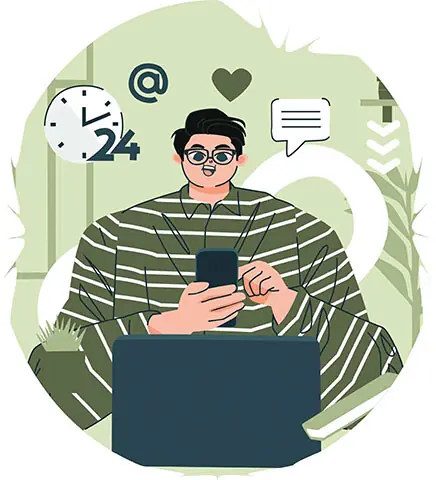
It all started when Ayaan began following student influencers online, slowly copying how they arranged their desks, the books they displayed and the aesthetic cafés they tagged. Soon, a study session didn’t feel complete without spending 10 minutes finding the perfect lighting, only to post a photo of a textbook he had barely opened. He would show off pictures of classic literature and self-help books he hadn’t actually read, paired with a deep highlighted line just for the vibes. When his friends saw these posts, they showered him with praise, calling him one of the most dedicated students they knew.
Ayaan would smile and play along, but the truth was far from that image. His room was messy, his focus was scattered and his grades were just average. With every compliment, the gap between his real life and his online persona grew bigger.
At first, the whole act was easy to maintain, almost like switching between his main account and an alt account. Ayaan started using literary his words in conversations to match his online persona, even when they didn’t feel natural.
One day, in a group discussion, a friend casually brought up a book Ayaan had supposedly read and loved, and everyone turned to him for his opinion. He nodded, trying to look unbothered and confident, but his mind went blank. He had never even touched it. The silence that followed felt so heavy that, for the first time, he realised he was just pretending to be a completely different person.
Soon, during a group study session, things began to collapse. A friend pointed to a deep quote about a classic novel Ayaan had posted the night before, asking for his thoughts on the tragic ending. Caught off guard and completely forgetting his own story online, Ayaan replied that he hadn’t even heard of the book, then quickly tried to cover it up with a clumsy excuse.
Everyone at the table was confused, so he carefully changed the topic. But the doubt had already been planted. Later that afternoon, when another friend asked to borrow a self-help book he had claimed to be reading, Ayaan hesitated and made up a weak excuse about leaving it at a cousin’s house. No one called him out directly, but the questioning looks lingered.
The fake image was slipping out of his control, and the weight of maintaining it was starting to crush him. That night, Ayaan didn’t open his phone like he usually did. For the first time in a long while, he wasn’t thinking about what to post or how to fix the image others had of him. Instead, he just sat in silence, replaying every version of himself he had created online and every moment he had pretended to be someone else. It hit him that he had spent so much time being what he was not, that he had completely stopped being real.
Slowly, he opened his profile and scrolled through the life he had built, one that looked perfect, but felt alien to him now. His finger hovered over the screen, not in confidence but in exhaustion, as he realised that maintaining a fake identity had taken more effort than building a real one ever would.
That was the moment he felt embarrassed by the image he had created. It was too difficult to pretend to be someone you are not. That moment changed him and he started focusing on who he actually was, even if it didn’t look impressive to others.
Published in Dawn, Young World, September 12th, 2026