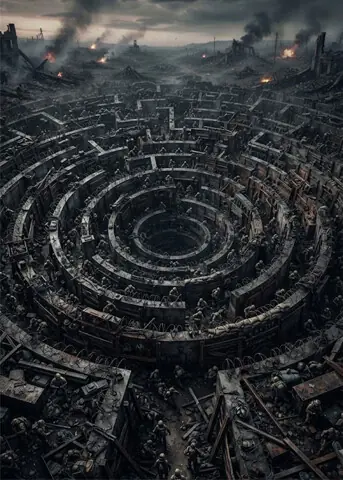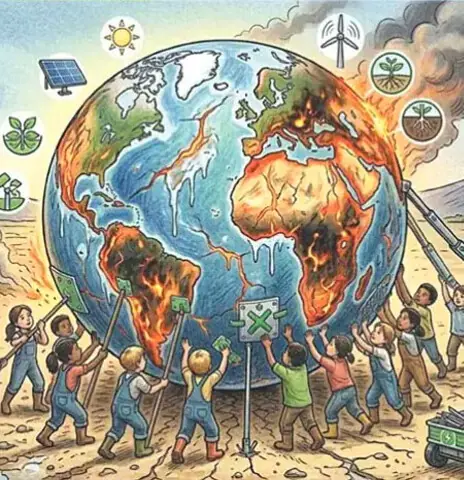
CURRENTLY, Pakistan is facing an environmental crisis that can no longer be treated as a matter for environmental scientists alone. Rising temperatures, water scarcity, air pollution, deforestation, biodiversity loss, unmanaged waste and increasingly frequent climate-related disasters are affecting communities across the country. Alongside these visible environmental problems lies a less visible challenge: the lack of environmental literacy.
Environmental literacy does not refer to merely knowing the names of environmental problems; it involves understanding environmental issues, developing responsible attitudes, acquiring the skills to respond to them, and becoming consciously aware of how everyday human actions affect the natural world. In today’s world, owing to the phenomenon of globalisation and digital fast-track communication, we are degrading our environment and the environment of living species and non- living elements in a variety of ways.
We, as a nation, are not fully aware of how or in what ways we are degrading or maltreating our environment. It is because of the low environmental literacy. Therefore, it is imperative to enhance environmental literacy in society. One way of doing that is to introduce Ecolinguistic courses at the post-graduate level to bridge the gap. In this regard, a significant role will have to be played by our language practitioners, policymakers, environmentalists and ecolinguists regarding climate change, plants, animals, biodiversity loss and environmental degradation.
Nasim Gul
Kohat
Published in Dawn, September 24th, 2026