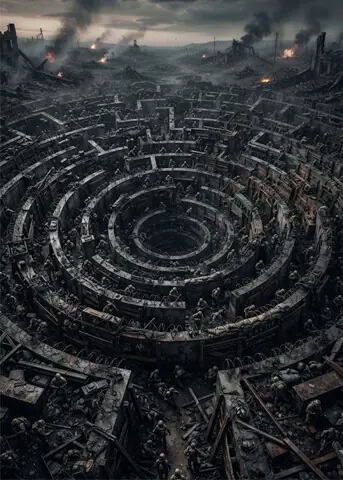
MILITARY history offers a consistent lesson. States can decide when to initiate war, but they rarely determine how or when it ends. Political leaders may authorise the use of force, but once conflict begins, the initiative is shared with the adversary. From Vietnam to Afghanistan, superior military capability has repeatedly failed to guarantee strategic success.
The true challenge is not launching a campaign, but bringing it to a close on terms that achieve political objectives at an acceptable cost. That lesson is increasingly relevant to the United States’ ongoing confrontation with Iran.
If Washington believed that carefully calibrated military pressure would quickly alter Tehran’s strategic calculations, recent developments suggest otherwise. Rather than yielding, Iran appears to have adopted a strategy of endurance. It is prepared to absorb immediate costs while preserving enough capability to deny the US a decisive political outcome.
This approach is neither new nor irrational. History is filled with examples of weaker states offsetting conventional military inferiority by prolonging conflict until the stronger power begins to bear rising political, economic and psychological costs.
In such circumstances, time becomes a strategic asset. Survival, rather than battlefield superiority, is often enough to frustrate a stronger opponent’s objectives. Iran appears to be following this familiar logic by absorbing military pressure, sanctions and diplomatic isolation while maintaining its known capacity to continue resisting.
For Washington, this creates a classic strategic dilemma. Military force can destroy infrastructure, weaken military capability and impose significant costs. What it cannot guarantee is a change in political intent. Unless Tehran concludes that compromise serves its interests better than continued resistance, the confrontation is unlikely to produce a decisive outcome regardless of operational success.
The clear distinction between operations and strategy remains fundamental. Tactical victories shape campaigns, but they do not automatically produce political success. History repeatedly shows that an adversary’s resolve, the cohesion of its leadership and its willingness to absorb punishment often matter more than the amount of physical damage inflicted upon it. Wars are ultimately contests of political will as much as of military capability.
The diplomatic dimension reflects the same reality. Military pressure and economic sanctions were actually intended to strengthen Washington’s negotiating position. But coercive diplomacy succeeds only when the rival target concludes that continued resistance would be costlier than a compromise. If Iran believes that extending the confrontation strengthens its bargaining position, meaningful negoti-ations will remain difficult regardless of military pressure.
Meanwhile, the costs of a prolonged confrontation continue to grow. Sustained military operations consume resources, stretch force commitments, increase regional instability, and inject uncertainty into global energy markets. At home, prolonged conflicts without a clearly defined political end inevitably attract greater public scrutiny. Democracies can sustain difficult wars, but only when the strategic purpose remains clear, credible and, indeed, achievable.
The central question is, therefore, no longer how this confrontation began, but how it can be brought to a sustainable conclusion. History’s enduring lesson is straightforward. Nations are not judged by their ability to initiate wars or demonstrate overwhelming force. They are judged by whether military action achieves lasting political objectives at a cost their societies are willing to bear.
Winning battles may widely influence the course of a war, any war, but securing a lasting, durable political end still remains the actual measure of strategic success.
Lt-Col (retd) Syed Raziuddin
Rawalpindi
Published in Dawn, September 30th, 2026