• US president says Tehran is ‘losing badly’, seeking a quick exit amid economic strain; WSJ reports US could resume strikes after midterms
• Russia offers help to stabilise crisis; China urges respect for Gulf nations’ sovereignty • Riyadh warns of energy risks from waterway disruptions
WASHINGTON: US President Donald Trump on Saturday rebuffed an Iranian offer to end the war between the two countries, dismissing a proposal that Tehran said could have reopened the Strait of Hormuz to international shipping within a week.
Hours after the proposal emerged, the Wall Street Journal reported that Trump doubted Iran would meet his conditions and was privately expecting to resume American air strikes once the November midterm elections had passed.
Trump later posted an image on his Truth Social platform showing a map of Hormuz circled and labelled “Trump Strait”.
The strait, one of the world’s most critical energy corridors, has become the fulcrum of the conflict. Speaking to reporters outside the White House on Saturday, Trump said he had turned down the offer.
“They want to make a deal where they open the Strait immediately because they’re losing so badly,” Trump said. “They want to make a deal and I think that’s fine. I like making a deal too.”
Trump also said Iran wanted to reopen the waterway because it was facing financial pressure.
“What they want to do is immediately open the Hormuz Strait ... because they have no money coming in, because they get their money from the Hormuz Strait,” he said.
The conflict, which has been running for nearly seven months, stems from a rapid military escalation that began on Feb 28, 2026, when a joint US-Israeli airstrike campaign killed Iranian Supreme Leader Ali Khamenei.
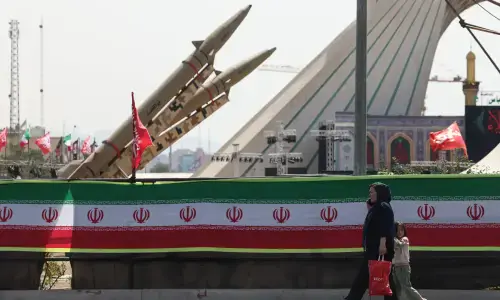
Tehran retaliated by using missiles and naval forces to close the Strait of Hormuz, a critical global energy chokepoint. In response, the United States imposed a comprehensive naval blockade, halting all commercial shipping to and from Iranian ports.
Iran’s offer
The seven day peace plan was raised by Iranian officials at the UN General Assembly in New York and passed to Washington through Qatari mediators.
Foreign minister Abbas Araghchi, fresh from talks with Trump’s envoy Steve Witkoff, said the proposal envisaged an end to hostilities across the region, including in Lebanon.
“Iran has conveyed to the United States, through Qatar, a concrete seven-day plan,” Araghchi told the assembly. “If the necessary conditions are met, the strait can be reopened, and normal maritime passage restored within seven days.”
“Iran does not accept coercion, threats or intimidation, and Iran will not surrender its sovereign rights under pressure,” he added.
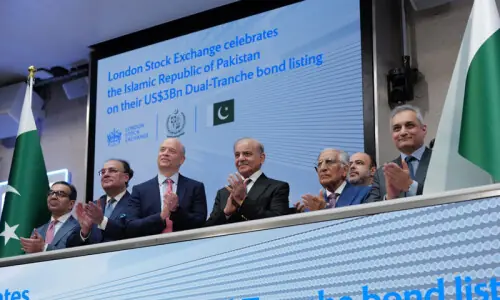
The conditions mirror the Islamabad Memorandum of Understanding signed with the US in June, calling for the release of frozen Iranian assets, the lifting of sanctions on Iranian oil and an end to the US naval blockade.
A spokesman for Iran’s Revolutionary Guards, Hossein Mohebi, told the Tasnim news agency that Tehran “will not cease punishing the US” until all seven of its conditions were met, adding that a halt to hostilities in Yemen also featured among the demands.
Iran’s president, Masoud Pezeshkian, told CBS News the offer had been drawn up “in coordination” with the supreme leader, Mojtaba Khamenei.
Meeting the UN secretary-general, Antonio Guterres, in New York, Pezeshkian said Iran “has not walked away from the negotiating table but, given past experiences, it no longer trusts the United States”.
The June agreement collapsed within weeks after Iranian forces opened fire on commercial vessels in the strait that Tehran accused of straying from approved shipping lanes.
Iran requires vessels to seek authorisation before transit, citing security and sovereignty concerns, and has continued to target ships it says have failed to comply. Washington has responded intermittently by bombing Iranian coastal targets.
Reaction at the UN
The conflict has disrupted oil flows through one of the world’s most important shipping routes and affected the global economy, drawing concern from other countries.
Russia’s foreign minister, Sergei Lavrov, said Moscow stood ready to help stabilise the strait and the broader Gulf region.
“We need trust in the relationships between the Gulf states, the Arab states, and Iran,” Lavrov told leaders at the UN. “Russia, together with other responsible states, stands ready to constructively contribute to stabilising this strategically important region.”
China also pushed back against Washington, with vice-president Han Zheng telling the assembly that the sovereignty of Gulf states must be respected.
Without naming the US directly, he said, “Major countries should have special responsibilities for safeguarding international peace and security, and they should take the lead in complying with the rules, upholding rule of law, and doing what’s right.”
“China holds that the sovereignty and security of countries in the Middle East, including the Gulf, should be respected,” he added.
The comments came after Trump warned Chinese President Xi Jinping against supporting Iran during talks in Washington. A US ambassador to China said Beijing had assured Washington it would not provide support to Tehran.
Saudi Arabia, meanwhile, warned that any attempt to close Middle Eastern waterways threatened global energy security.
“The international community has been absent from assuming its responsibilities in confronting all that threatens international peace and security,” Saudi Foreign Minister Faisal bin Farhan told the assembly, calling for stronger international action to safeguard freedom of navigation.
Published in Dawn, September 27th, 2026