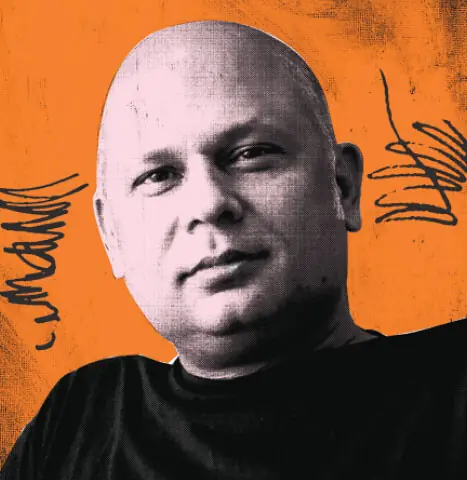
“I have seen from very close quarters a number of well-known personalities and have learnt much from non-entities while moving among them. What I learnt from them and how did I find them ... is what I have recorded in the character sketches and the obituaries collected in the volume before you.” That is what Dr Tahir Masood has written in his foreword to the book Koo-e-Dilbaran published by Dost Publications. This book is a collection of obituaries and character- sketches originally published as columns.
The personalities dealt with have been divided by the author into two categories — those known as distinguished personalities and those who were just commoners. Similarly, the writings presented can be classified into two categories: finely written character sketches and along with them routine obituaries and cursorily written introductions of lesser known individuals.
The first two articles of the book are finely written sketches of his father and grandfather. Perhaps he is more successful in portraying his grandfather, Dada Abba. Here he comes alive to us along with his goodness and his idiosyncrasies born out of his old age.
At the same time these two sketches serve another purpose. These two personalities seem to help him recall his own early years. How vividly he remembers his last days in East Pakistan and those hard times when he, along with his family, had landed in Karachi. These two articles can well form a chapter of his autobiography if he ever intends to compile it.
But the best character sketch in this book is that of Mushfiq Khwaja and his relationship with the author. He was well in a position to portray various aspects of his personality which he has done with ability.
Khwaja was primarily a researcher. And as a researcher he was never in a hurry. In each case he devoted more time in researching than what was due. One such instance is his research work on Yagana Changezi. He took almost 10 years to compile the poet’s collected works.
However, in spite of his achievements in the field of research he cared little for name and fame. He was in particular allergic to the electronic media and made it a point never to agree to give an interview to any television channel. Justifying this attitude, he said to Tahir Masood, “what is important is your achievement in your field. Name and fame carry no worth. Satan is the most famous figure in the world. Who can compete with him in this respect?” It, according to him, does not fit well on a writer to participate in the rat-race of worldly fame and honour.
In fact, in most cases the obituaries written by him are more than what an obituary is, in general, thought to be. Going beyond the formal compliments to the dead soul, he is seen to bring before us the real worth of the departed soul. For instance, in the case of Ahmad Ali Khan he, going beyond formal compliment, pays him a glowing tribute as the last newspaper editor in the history of our journalism. According to him, with the passage of time the newspaper editor now stands deprived of the status he once possessed. Ahmad Ali Khan, he thinks, stands distinguished as he succeeded in maintaining his position as an independent editor exercising all his rights till the end.
Writing about Hanif Ramay, Dr Masood has whole-heartedly paid compliments which he well deserved. But at the same time he has raised some pertinent questions in respect to his position as a painter vis-à-vis his status as a politician. He quotes his saying while addressing a seminar arranged by the PNCA that he is now acutely conscious of the fact that he has wasted 33 years of his life as he remained involved in politics at the cost of his paintings. Masood pertinently asks, “I wonder that during his long years in politics he never realised that he is wasting his time in politics, forgetting his responsibility as a painter.”
On other occasions he quotes Ramay saying with a sense of regret that our society has unfortunately ignored fine arts and culture. This statement prompted him to comment that our society was guilty of repeating what Ramay had already done. He too was guilty of cutting himself off from the arts, literature and culture.