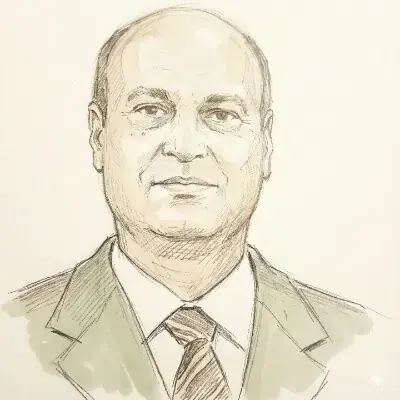
ISLAMABAD: Pakistan’s nuclear programme was launched for peaceful purposes but national security issues forced the country to build nuclear weapons, former nuclear scientist and the chairman of the Underground Gasification Project at the Thar Coal Field, Dr Samar Mubarakmand, said on Tuesday.
Dr Mubarakmand was speaking at a seminar titled ‘Civilian Uses for Nuclear Energy in Pakistan: Opportunities and Prospects’, organised by the Islamabad Policy Research Institute (IPRI).
Although the seminar was supposed to focus on nuclear energy, the discussion revolved mostly around nuclear weapons and nuclear material.
Dr Mubarakmand said Pakistan’s nuclear programme was always peaceful, and there have been various peaceful applications of nuclear technology such as the establishment of several nuclear medical centres, agricultural research centres and the radioactive tracers used by the Water and Power Development Authority (Wapda) to build the Mangi Dam in Balochistan.
Because Pakistan is not a signatory of the Non-Proliferation Treaty, he said it was impossible for the country to receive simple technology, and this was possible because of Pakistani scientists who despite heavy sanctions made Pakistan a nuclear state.
“The relaxation of bans by members of the Nuclear Suppliers Group (NSG) with respect to India as a special dispensation in 2008 under US lobbying, and the current efforts to make India a member of the NSG is an example of the biased Western psyche and mindset,” he claimed.
Defending Pakistan against allegations of helping Iran and Libya build nuclear weapons, he said both those countries remain non-nuclear states.
“The world can see that Pakistan’s civilian nuclear programme is not being used for military purposes. No theft of nuclear material has ever taken place in Pakistan. We need to survive in the subcontinent with dignity and, being a smaller state, Pakistan restored the balance of power by conducting nuclear tests after India,” he said.
Strategic Vision Institute Executive Director Prof Zafar Iqbal Cheema said the treatment given to India by the West is evidence that politics prevails over rules.
“India was trying to make nuclear weapons since 1959, but India is considered a country with a good track record and Pakistan is considered a country that cannot be trusted. However, it is a fact that the quality, capacity and safety of Pakistani nuclear weapons are better compared to India’s,” he claimed.
Prof Cheema endorsed a statement by the Senate chairman, where he claimed that Pakistan was denied nuclear energy because it is a Muslim country.
National Defence University assistant professor Dr Rizwana Karim Abbasi, however, did speak about nuclear energy. She said the demand has increased since the 1990s, and nuclear energy could fill the demand for energy.
“Greenhouse gases have to be cut by 70pc by 2050 so the world will definitely move towards nuclear energy, which is cheaper and environment-friendly. China is producing 19,000MW of electricity through nuclear energy. India and 31 other countries are also going for it,” she said.
“Although incidents of atomic reactor accidents in Germany and Japan have led to resistance to nuclear energy in the West, it is still believed that nuclear energy should be used,” she added.
Dr Abbasi said fossil fuels increase environmental pollution so the world needs to depend more on nuclear power, and safety standards have to be improved.
“Pakistan needs to secure its membership in the NSG, and it should make more nuclear power plants to make more energy,” she said. The former chairman of the Pakistan Atomic Energy Commission, Dr Pervez Butt, said Pakistan has been considering producing 8,835MW electricity through nuclear energy by 2030, which will meet 5 to 8pc of the total requirement.
Published in Dawn, December 28th, 2016