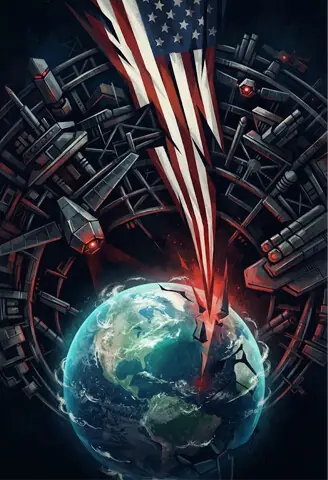
THIS is with reference to the report ‘Washington lifts lid from orbital weapons programme’ (Sept 16). The United States’ acknowledgment that it has deployed weapons in space should provoke international alarm and renewed diplomatic action because space is indispensable for modern life, supporting navigation, communications, crucial weather forecasting, scientific research and essential infrastructure.
Extending military confrontation into this environment exposes humanity to consequences beyond the control of any single government. The most immediate challenge is to prevent this disclosure from becoming an invitation to further deployments, and, instead, to make it the starting point for a comprehensive international agreement against space weaponisation.
China has rightly warned against turning outer space into a battlefield, while Russia has called for its demilitarisation. The capacity to destroy satellites is already established. The US, Russia, China and India have demonstrated destructive anti-satellite capabilities. Missile development, satellite launches, tracking systems and spacecraft operations provide the foundations that countries can draw upon in developing military space capabilities. The spread of relevant expertise increases the importance of restraint before more governments follow the American lead.
The Secure World Foundation’s 2026 assessment examines counterspace developments in 13 countries. This really demonstrates that the danger extends well beyond the four countries that have so far demonstrated destructive satellite interceptions. As such, interference with navigation, communications or timing signals can disrupt civilian infrastructure, which can result in military confrontation.
The civilian implications are substantial. Navigation, emergency response, transport, telecommunications and financial networks use satellite services or satellite-derived timing. Not every internet connection passes through the orbit, but disruptions to these supporting functions can affect people far beyond the immediate theatre of conflict. A damaged military asset and a disrupted civilian service may be linked through shared infrastructure. The public, therefore, has a direct interest in decisions too often discussed exclusively through the language of deterrence, military advantage and national prestige.
The US itself has compelling reasons to prevent this escalation. Its substantial investment in space systems creates advantages as well as assets requiring protection. Countries with fewer satellites may well calculate that threatening an opponent’s infrastructure offers dispro- portionate leverage. An arms race could force Washington into increasingly expensive efforts to protect systems against threats encouraged by the competition.
Existing law provides important but incomplete restraints. For instance, the Moon Agreement of 1979 reinforces peaceful-use restrictions, but it has no US, Russian and Chinese participation. Besides, registration, liability and rescue treaties provide additional governance, not a comprehensive weapons prohibition. Bilateral and United Nations initiatives likewise leave gaps.
The recent US disclosure should trigger a renewed international initiative. A UN resolution could establish broad political support for a comprehensive prohibition, and begin negotiations addressing deployment, testing, threats and attacks against space systems.
The US should lead that effort alongside other space powers. Preserving space serves American interests and the interests of countries whose citizens depend on services they do not control. Leadership should be measured by the ability to prevent catastrophe, not merely to prepare for confrontation. A comprehensive and verifiable agreement would protect humanity while reducing dangers/threats to American infrastructure and people. The opportunity now is to turn an alarming announcement into diplomatic momentum before competition creates consequences that no government can readily reverse.
Qamar Bashir
Islamabad
Published in Dawn, September 24th, 2026