ALL higher education institutions are expected to uphold the principles of merit, transparency and accountability, but, unfortunately, that is not always the case in Pakistan where admission test results are often treated as confidential infor-mation, leaving applicants confused, disappointed, and without any means of evaluating their performance.
My own recent experience related to the MPhil English Literature admission screening test at the University of Karachi highlights this frustrating practice.
As a candidate, I really found this lack of transparency deeply disappointing. Candidates appeared in the test with the hope that their efforts would be evaluated fairly and transparently. However, when the final result was announced, applicants’ marks were missing from the merit list.
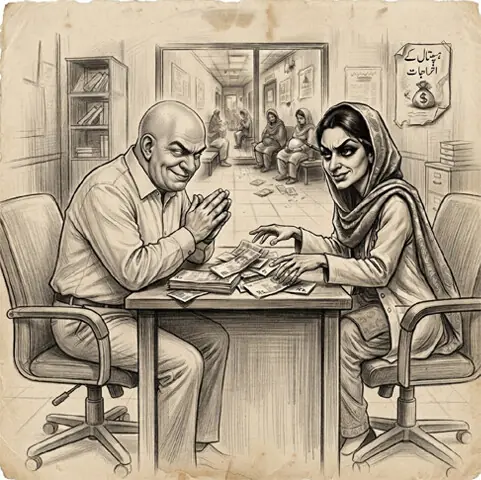
Several private-sector universities also follow a similar practice. The applicants are merely informed whether they have qualified or not without being given access to the marks that determined their academic future. Such secrecy undermines confidence in the admission process and deprives candidates of valuable feedback for future academic pursuits.
If the universities are confident about their testing process, why should the marks remain hidden?
Why are the applicants denied the right to know how they performed? Why is there no mechanism to verify whether the evaluation was conducted fairly? Students invest considerable time, effort and resources in preparing for these highly competitive examinations. They deserve transparency; not uncertainty.
The Higher Education Commission (HEC) and university administrations should formulate clear policies in this regard. The right to information should not end at the gates of academia. A truly merit-based system is not one that merely claims fairness.
It is one that demonstrates fairness through openness and accountability. Merit is not merely about selecting successful candidates. It is about ensuring that every candidate understands how and why those decisions were made.
Unless our universities embrace this principle, questions about fairness and accountability will continue to persist.
Sumera Mahar
Shikarpur
Published in Dawn, September 28th, 2026