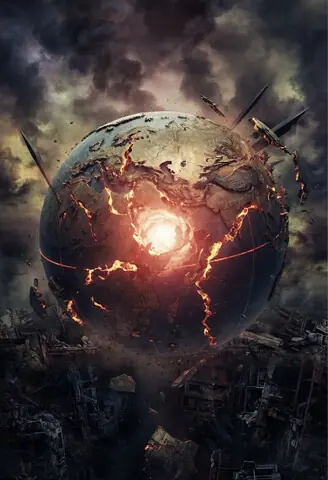
THE next global confrontation may not begin with a formal declaration of war. It may emerge gradually through military exercises around Taiwan, Russian moves near Japan, a deepening partnership between Moscow and Pyongyang, North Korea’s nuclear posturing, and escalating tensions in the Middle East. Geographically distant, these developments are increasingly connected by a larger struggle for power and influence.
The post-Cold War era of relatively uncontested American dominance is giving way to intense strategic competition. China is challenging the United States economically, technologically and militarily; Russia is confronting the Western security order; North Korea is expanding its nuclear leverage; while Iran maintains an independent regional agenda alongside significant strategic cooperation with China and Russia. Yet, calling this simply a new Cold War would be misleading.
What appears to be emerging is better described as two competing strategic corridors. One is a US-led security network involving Japan, South Korea, Taiwan and Israel, supported by wider European and Indo-Pacific partnerships. The other is an emerging China-centred strategic ecosystem in which cooperation with Russia and North Korea has become increasingly significant, while Iran maintains a strategic alignment.
The distinction matters. These are not two rigid military blocs. Their interests do not always coincide or collide. Today’s competition is increasingly about strategic geography, deterrence, technology, trade, military capability and influence.
Taiwan is perhaps the most dangerous intersection. Any major conflict could involve the US and Japan, and disrupt global trade and semiconductor supply chains. The central question is, therefore, not simply whether China could attack Taiwan, but whether deterrence can make the cost unacceptable.
Japan faces a similarly complex strategic environment. Its long-standing dispute with Russia over the southern Kuril Islands exists alongside growing concerns over China and North Korea. Three separate disputes are increasingly becoming one broader security challenge for Tokyo.
The Russia-North Korea partnership adds another layer. Their comprehensive strategic partnership and mutual military assistance provision have transformed their relationship. North Korea has supported Russia’s war effort, while Pyongyang can potentially gain military experience, economic assistance, diplomatic backing and advanced capabilities. In other words, a war that began in Europe is producing strategic consequences in East Asia.
Then comes the Middle East. American commitments there raise the question of strategic overstretch. Washington must simultaneously manage Iran, support European allies amid the Ukraine war, deter China in the Indo-Pacific, and maintain commitments to Japan, South Korea and Taiwan. While the US is not necessarily abandoning Asia, analysts wonder how much strategic pressure one power can manage across multiple theatres simultaneously.
And then there is the strategic middle comprising India, Turkiye and Pakistan as well as countries in the Asean and Gulf blocs. These are increasingly seeking autonomy rather than permanent camp membership. Perhaps, therefore, the world is not returning to two Cold War-style camps. It may be entering an era of two competing power corridors — and a powerful middle determined not to choose sides. The real contest is no longer simply China versus the US.
It is over who will shape the security architecture, technology, trade routes and, indeed, political rules. The old order is clearly weakening. A new one is emerging. The big question is: who will define it?
Majid Burfat
Karachi
Published in Dawn, September 29th, 2026