Technology, that is meant to improve our lives, is now completely taking over it, so much so that we have now become its slaves Technology, including internet, moves our society forward. Without doubt, it allows us to be smarter, faster and better. I mean, who doesn’t love having access to a world of information in a couple of seconds, without having to pour over thick, dusty books? Technology now brings a constant stream of information on our fingertips. Needless to say, it promotes efficiency and connects us to the world.
However, despite using science and technology to improve our lives, many of us have started acting, and even looking, like addicts, junkies or … slaves.
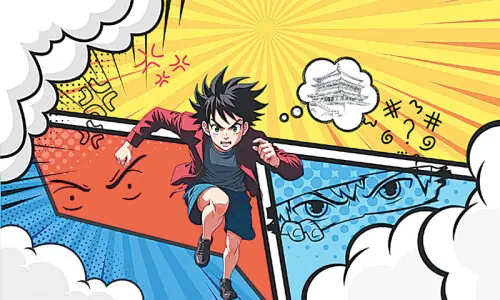
Let’s try to visualise this slave to the digital world. It’s easy because most of us have seen one ... and probably are one! He is rolled up in a dark corner, his red bulging eyes darting around a screen. His skin is ‘grey,’ he has prematurely arthritic fingers and his back in bent over permanently. This digital slave does not know how long he has been sitting there — an hour, a day or a month?not know how long he has been sitting there — an hour, a day or a month?
He snaps and shouts at whoever tries to interrupt his precious time with celebrity news, zombie games and online friends, and really, his attention span has decreased to less than a goldfish’s — he can’t spend more than a few seconds on a single webpage and he certainly can’t concentrate on real-life. This is because his brain has been crafted to be best suited for life only with the help of a computer.
Our little friend constantly procrastinates and as a result, he has flunked school and isolated himself from people. He was once forced to attend a family reunion, but he couldn’t find his way to the venue because of his navigational skills have been reduced to nothingness without GPS.
When he finally got there, he could hardly think straight, being a victim of FOMO — ‘Fear of Missing Out’ which is the anxiety that something more exciting or important is happening on social media as compared to real life.
He incessantly checked his notifications, watered his crops on Farmville and had a panic attack when his battery died, as the people around him ate, laughed and talked. This digital slave forgot that life, at its best, was happening right in front of him and that these experiences would never repeat themselves. That these conversations were authentic, and the love was real.
Now you assess yourself. How alike are you to this digital slave? How many times do minutes turn into hours and hours turn into sleepless nights that you spend staring at a device? How often do you say, “I’ll do that in a moment, I have to check my email first?”
Can you bear the thought of reading a book that’s over a hundred pages long? How much time do you spend inside your own head, or with real people, in comparison to your computer or your smartphone or a tablet?
And this isn’t all. Social media such as Facebook and Twitter are the most used platforms on internet, and by using them we voluntarily become digital slaves. These websites can do what they want with our digital person. They can sell our data, pictures, whatever we post, to whoever they like. And the scariest part is … we can’t stop them. Our privacy is invaded, often based on a simple “Like” button, and various psychological tricks are used to predict or even control our every move.
You might be surprise to know that there has been a rise in clinics serving digital addicts which range from parents, teachers and managers to gamers and students. We are steadily becoming a race which lives in isolation to each other, with arthritic joints, backache, weak eyesight and lots and lots of psychological disorders.
So, what can be done to stop this hyper-connectivity? To rehabilitate these digital slaves?
We have to be more disciplined about our browsing habits. We need to normalise the way we act and think, stop and restart ourselves so that we can be the ones in control of our time, our data and our focus, instead of an app or services.
Turn it off, walk away and no matter how strong the pull is to turn it back on, don’t do it. Because if we are all too busy staring down at our screens, we’re going to miss out on the things that matter most — family, love, friends and above all, our own life!
Published in Dawn, Young World, January 16th, 2015